Part 34 of the HikeLab Ultimate Ultralight Guide Series.
You don’t think much about a first aid kit until the trail forces the issue. A hot spot turns into a blister on mile three. Someone slips on wet rock and slices a knuckle. A mild headache becomes dehydration, then bad decisions. That’s why backpacking first aid kit essentials matter more than most hikers realize: the right few items can keep a small problem from ending the trip.
If you’ve ever stared at a store-bought kit and wondered whether it’s too bulky, too generic, or missing the things you actually need, you’re not alone. Most backpackers either overpack out of fear or underpack because they want to save weight. This guide fixes that. You’ll learn what to bring, what to skip, how to match your kit to your trip, and how to use those supplies when something goes wrong.
Key Takeaways
- The best backpacking first aid kit is small, organized, and built around the injuries and illnesses most likely to happen on your route.
- Blister care, wound care, pain relief, allergy support, and basic tools matter more than bulky extras you’ll never use.
- Your kit should change based on trip length, weather, remoteness, group size, and personal medical needs.
- Packing the right supplies isn’t enough; you also need to know where they are and how to use them fast.
Why Backpackers Need a Different Kind of First Aid Kit
A backpacking kit isn’t the same as a car kit, office kit, or home medicine cabinet. On the trail, every ounce counts, space is limited, and help may be hours away. That means your first aid gear has to be compact, practical, and focused on real trail problems.
Most backcountry issues are not dramatic rescues. They’re the small, common problems that build fast when ignored. Blisters can change your gait and slow the whole group. A minor cut can get dirty quickly. Diarrhea, dehydration, bug bites, and sore joints can wear you down long before a true emergency shows up.
Think of your first aid kit as a tool for buying time, reducing pain, and preventing a manageable problem from becoming a dangerous one. It won’t replace wilderness medical care, but it can keep you functional enough to hike out, rest safely, or stabilize someone until help arrives.
That’s also why a backpacking first aid kit should match your skill level. If you don’t know how to use a niche item, it probably doesn’t belong in your kit. A smaller setup you understand is better than a larger one filled with things you’ll fumble with under stress.
Backpacking First Aid Kit Essentials Every Hiker Should Pack
If you want a simple checklist, start here. These backpacking first aid kit essentials cover the problems most hikers are actually likely to face.
Wound care
Carry adhesive bandages in a few sizes, sterile gauze pads, and medical tape. Add a small packet of antibiotic ointment if you use it. These handle scraped knees, cracked skin, shallow cuts, and small burns from stoves or cookware.
Alcohol wipes can help clean intact skin around a wound, but plain water is often the better choice for flushing dirt out of an open cut. A tiny irrigation syringe is useful on longer trips, though it’s optional for ultralight hikers.
Blister care
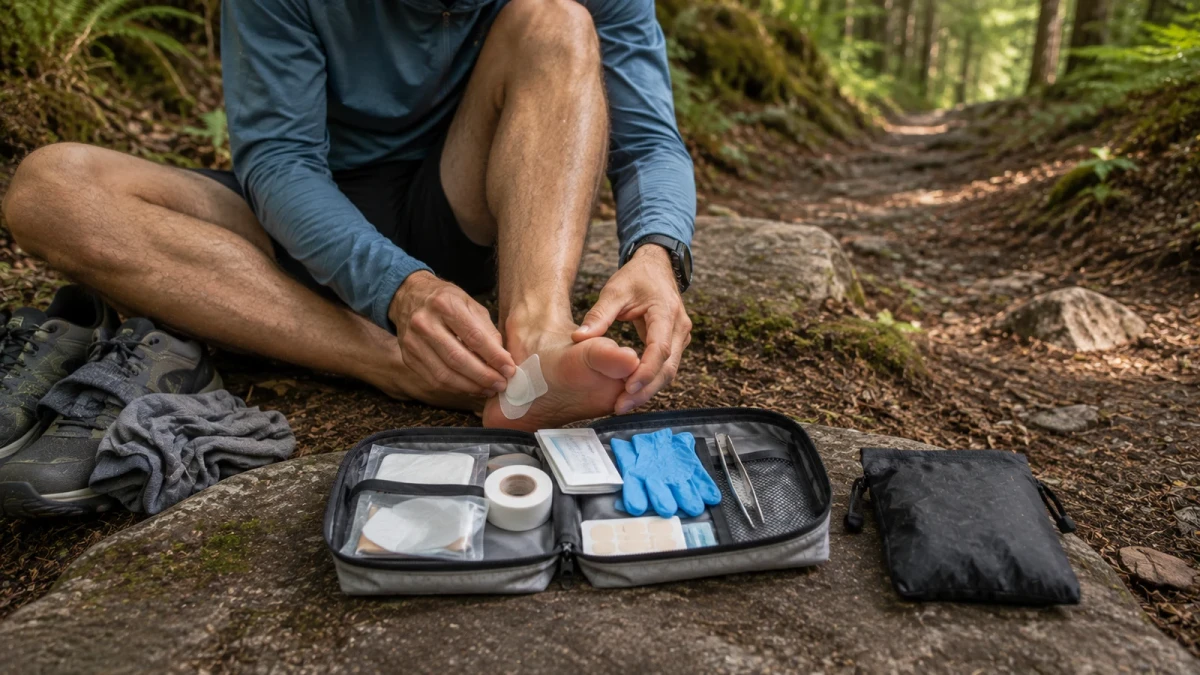
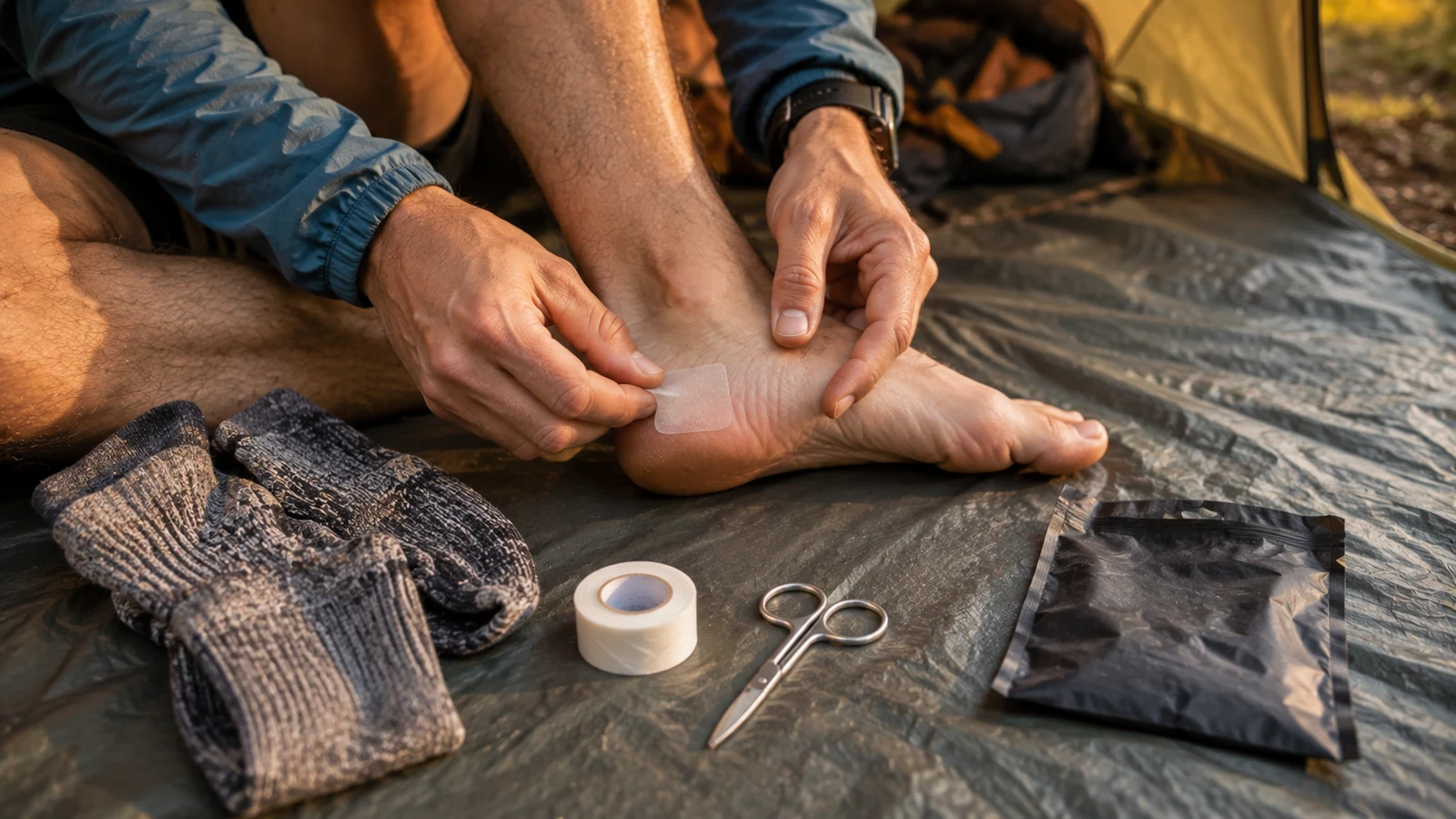
This is non-negotiable. Moleskin, leukotape, hydrocolloid blister bandages, or another blister system you trust should be in every kit. Hot spots are one of the most common trail problems, and quick treatment can save the day.
Medications
Bring pain relievers such as ibuprofen or acetaminophen, an antihistamine for mild allergic reactions, and an anti-diarrheal if stomach trouble would create a serious problem on your route. Some hikers also pack antacids or electrolyte tablets. If you take prescription meds, carry enough for the full trip plus a little extra.
Tools
Pack tweezers, small trauma shears or tiny scissors, and a few pairs of nitrile gloves. Tweezers matter for splinters, ticks, cactus spines, and debris. Scissors help with tape, gauze, and clothing if you need to expose an injury quickly.
Support items
A triangular bandage or elastic wrap can support a sprain, create a sling, or secure padding. These don’t replace good judgment, but they give you options if someone needs help walking out.
Emergency extras
A CPR face shield, a small emergency blanket, and a written card with emergency contacts and medical info are smart additions. These weigh little and cover situations that are rare but high stakes.
If you’re building your own kit, pack everything in a bright, water-resistant pouch. A red or orange bag is easier to spot when someone yells for help and you’re digging through a pack in fading light.
How to Build Backpacking First Aid Kit Essentials for Your Trip
The smartest kit is not the biggest one. It’s the one that fits your trip.
Start with trip length. For an overnight hike on a well-traveled trail, you can keep the kit lean because you’re close to a trailhead and likely to see other people. For a three-day route in rough country, you need more blister supplies, more meds, and more wound care because you can’t assume an easy exit.
Next, think about remoteness. A backpacking first aid kit for a national park day route with cell service looks different from one for an off-trail weekend in the Winds or the Bob Marshall. The farther you are from help, the more you should plan for stabilization and self-reliance.
Weather matters too. Hot trips increase the risk of dehydration, chafing, and heat illness. Cold, wet trips raise the stakes for hypothermia, numb hands, and sloppy foot care. Desert travel makes tweezers, sun protection, and hydration support more important. Bug-heavy areas may justify bite relief or a stronger antihistamine plan.
Group size changes the math. Solo hikers can usually pack smaller quantities, but they may need to think harder about self-treatment and communication. Group leaders should bring more dressings, more blister care, and enough medication variety to cover common issues across the team.
Personal history should shape your kit more than generic lists do. If you get migraines, pack for migraines. If your knees flare on descents, support that problem. If you have severe allergies, your prescription rescue medication belongs at the top of the list, not buried under the “nice to have” items.
Here’s a simple rule: pack for probability first, severity second. That means you cover the issues most likely to happen, then add a few items for higher-risk scenarios with serious consequences.
If you want a fast starting point, make your core kit once, then adjust it before every trip. That’s easier than rebuilding from scratch each time. A quick seasonal review before you leave can prevent the classic mistake of carrying dried-out ointment, expired meds, or tape that no longer sticks.
What Most Hikers Overpack and Underpack
The most common first aid mistake isn’t carrying too little. It’s carrying the wrong stuff.
Many hikers overpack dozens of adhesive bandages, giant rolls of gauze, and bulky cold packs they’ll never use. Others throw in a survival-store medley of gadgets without learning what any of them are for. That creates weight without increasing usefulness.
At the same time, hikers underpack the items that solve real trail problems. Blister treatment is the big one. So are pain meds, tape, antihistamines, and a reliable wrap for minor strains. These are the items that get used over and over.
Maya learned that lesson on a rainy two-night trip in the Smokies. She had a store-bought kit stuffed with tiny bandages and a mini whistle, but no leukotape. By the second afternoon, a heel hot spot had turned into a full blister. She slowed to a limp, the group lost daylight, and they had to cut a planned side trip. On her next outing, she brought a smaller kit with a dedicated foot-care section and finished all 28 miles without a problem.
Another common miss is organization. A first aid kit isn’t helpful if you need two minutes of rummaging to find one packet of gauze. Use mini zip bags or labeled compartments for wound care, meds, blister care, and tools. When people are cold, tired, or stressed, simple systems win.
The fastest way to find out where you sit is a floor audit: before your next trip, dump your current kit on the floor and ask one hard question about every item. “Would I realistically use this on the trail?” If the answer is no, cut it and replace it with something more practical.
How to Use Backpacking First Aid Kit Essentials on the Trail
Supplies matter, but skill and timing matter more. The best kit in the world won’t help if you ignore a problem until it’s severe.
Take blisters. The right move is to stop early, not late. The moment you feel rubbing, dry the area, apply your blister treatment, and check shoe fit and sock condition. Five minutes of prevention can save five miserable hours.
Cuts and scrapes follow the same pattern. Rinse with clean water, control bleeding with pressure, protect the wound, and keep it clean. On the trail, dirt is often the real enemy. A small cut on day one can become a painful mess by day three if it’s not cleaned and covered.
Jordan saw that play out during a backpacking loop near Moab. He brushed past sandstone, sliced the back of his hand, and wanted to “just keep moving.” His partner Elena stopped him, flushed the wound with water, closed it with a sterile dressing, and wrapped it before lunch. The cut never became trip-ending. Had they left it open in the dust, it easily could have.
Sprains and strains need a calm response. Rest the area, reduce load, use compression if appropriate, and reassess. On a backpacking trip, the question is often less “Can we keep hiking?” and more “Can we get out safely without making this worse?”
If you want a practical skills refresher before your season starts, watch a wilderness first aid demo from a trusted source like NOLS: https://www.youtube.com/@NOLSedu. A short video review on blister care, wound cleaning, and wrapping techniques can make your kit far more useful in the field.
One more trail rule: treat the person, not just the injury. If someone is hurt, also check warmth, hydration, fatigue, and mental state. A minor ankle tweak feels very different when the hiker is cold, underfed, and two hours from camp.
The Most Important Meds and Foot-Care Items to Carry
For many hikers, medications and foot care do more real work than bandages. That’s not flashy, but it’s true.
Pain relievers help with headaches, sore knees, muscle aches, and inflammation after long climbs. Antihistamines can calm mild allergic reactions from plants, insects, or unknown irritants. Anti-diarrheal medication can be a trip saver when water treatment went wrong or your stomach turns on day two.
Still, medication belongs in clearly labeled doses, ideally in waterproof mini bags. Don’t toss loose pills into the bottom of your kit. Include the name, dosage, and basic use instructions, especially if you hike with other people.
Foot care deserves its own section because feet are the engine of the trip. Dry socks help, but so does carrying enough tape to treat multiple hot spots. A small bit of gauze, lubricant for friction-prone areas, and a needle only if you know proper blister care can all be reasonable additions. If you don’t know how to drain a blister safely, skip that step and focus on protection and offloading pressure.
Luis figured this out on a four-day section hike in Colorado. He packed a beefy first aid kit with wraps, pads, ointments, and emergency gear, but only one small blister bandage. By day three, constant heel friction had him walking sideways on descents. He finished the route, but barely. Afterward, he rebuilt his backpacking first aid kit essentials around foot care first, and his next trip felt easier even though his pack was lighter.
Another habit worth building is a “high-use module” inside your kit. Put blister treatment, pain meds, antihistamines, and a few bandages in the easiest-to-reach pocket. These are the items you’re most likely to need without warning.
How to Pack, Store, and Check Your Kit Before Every Trip
A good first aid kit should be fast to access, protected from water, and easy to restock. That means packing system matters almost as much as contents.
Use a water-resistant pouch inside your pack, and consider double-bagging medications in small zip bags. Label categories if you hike with others or share gear often. Clear organization saves time when daylight is fading or rain is falling.
Keep the kit in the same place on every trip. If possible, tell your hiking partners where it is. In a stressful moment, nobody should have to ask which pocket holds the medical gear.
Before each trip, run a two-minute check:
- Replace anything used on the last outing.
- Check expiration dates on medications.
- Confirm tape still sticks and ointments haven’t dried out.
- Match supply levels to trip length and group size.
- Add any personal medications or seasonal needs.
This is also the time to think beyond the kit itself. A first aid setup works better when it’s paired with a map, navigation plan, extra insulation, and a way to call for help if the trip goes sideways. Safety is a system, not a pouch.
If you want a simple habit that pays off all season, keep a short first aid checklist in your gear closet or notes app. The goal isn’t perfection. It’s making sure you leave with a kit that’s current, useful, and ready when you need it.
FAQ
How big should a backpacking first aid kit be?
It should be as small as possible while still covering likely trail problems. For most solo weekend hikers, a compact pouch is enough. Longer, more remote, or group trips justify extra quantities and a few more support items.
What are the most important backpacking first aid kit essentials?
Blister care, wound care supplies, pain relief, antihistamines, tweezers, tape, gloves, and a wrap for minor sprains are the core essentials. Personal medications are just as important and should always come first.
Why not just bring a pre-made first aid kit?
Pre-made kits can be a good starting point, but many are built for broad appeal instead of trail reality. They often include too much of what you won’t use and not enough of what hikers use most, especially blister supplies and practical medications.
Which medications should I carry on a backpacking trip?
That depends on your health history and route, but many hikers carry a pain reliever, an antihistamine, and an anti-diarrheal. Prescription medications, allergy rescue meds, and any doctor-recommended items should always be prioritized over generic packing lists.
When should I replace items in my first aid kit?
Check the kit before every trip and do a deeper review every season. Replace used supplies right away, swap expired meds, and test older tape or ointments before trusting them in the field.
Next Steps
- Review Leave No Trace for Ultralight Backpackers for safe, low-impact trail practices.
- Read Wet Weather Ultralight System for weather-related safety.
- Check Bear Safety & Food Storage for backcountry risk management.
Sources
- NOLS — Wilderness Medicine — backcountry first aid standards
- Wilderness Medical Society — Backcountry First Aid Guidelines — medical protocols
- CDC — Tick-Borne Disease Prevention — trail health risks
- American Red Cross — Wilderness & Remote First Aid — first aid fundamentals
Napište komentář