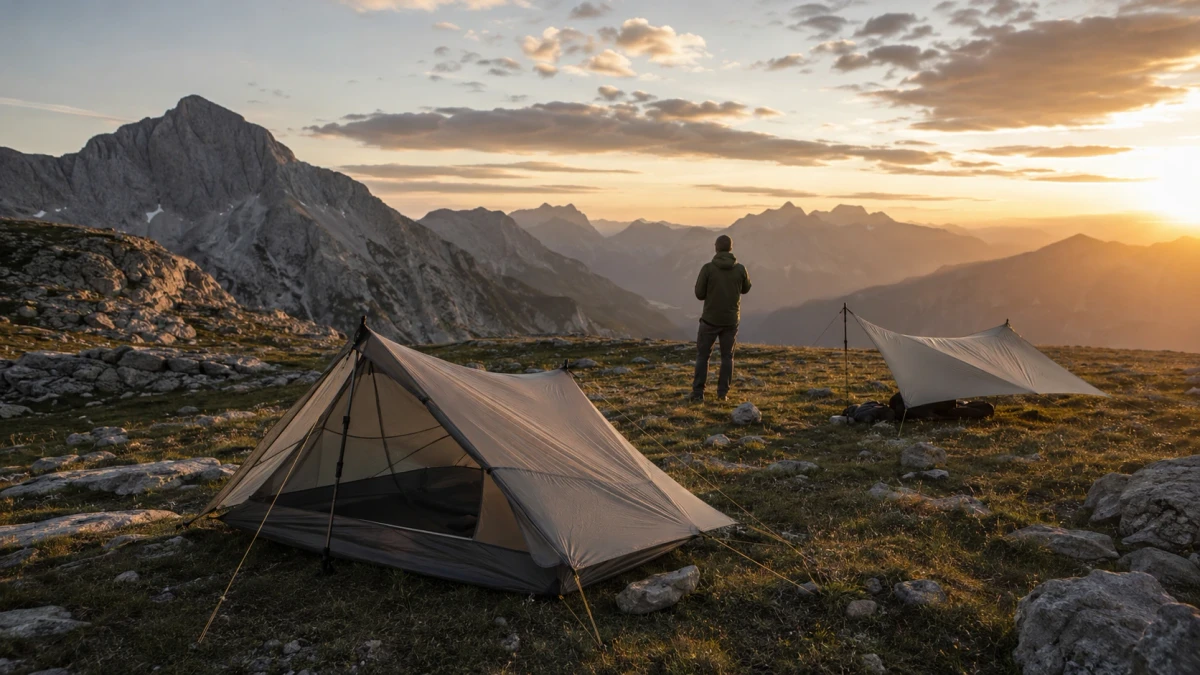
Part 04 of the HikeLab Ultimate Ultralight Guide Series.
What if the lightest shelter in your spreadsheet is the one that gives you the worst night outside? That question sits at the heart of every ultralight shelter decision. A tarp might save half a pound, but if wind, bugs, or condensation keep you awake, those ounces stop looking impressive fast. Most hikers need the ultralight shelter that fits their weather, skill level, route, and tolerance for discomfort.
If you’ve been bouncing between tarps, bivy sacks, hammocks, and trekking-pole tents, the confusion makes sense. Specs are easy to compare, but real-world tradeoffs are not. This guide will help you cut through that noise. You’ll learn the main ultralight shelter types, how they perform in real conditions, where hidden weight creeps in, and which setup makes sense for the kind of trips you actually take.
Key Takeaways
- A trekking-pole tent is the best ultralight shelter for backpacking for most hikers because it balances low weight, weather protection, and livability.
- Tarps and bivy sacks work best when you already have solid campsite judgment, setup skill, and a high tolerance for exposure.
- The right ultralight shelter depends more on bugs, wind, rain, terrain, and condensation than on listed packed weight alone.
- Hidden extras like stakes, poles, seam sealing, liners, and add-on inners can erase the paper weight savings of a minimalist shelter.
- Quick answer: The best ultralight shelter for backpacking is usually a trekking-pole tent. It offers the strongest mix of low weight, storm protection, bug defense, and usable space for most three-season trips.
If you want to build the full system, pair this guide with Ultralight Sleep Systems, Trekking-Pole Tents in Wind and Rain, and Silpoly vs DCF vs Silnylon.
| Shelter type | Best for | Main advantage | Main drawback |
|---|---|---|---|
| Trekking-pole tent | Most backpackers | Best balance of weight and protection | Needs solid staking and site choice |
| Tarp | Experienced ultralight hikers | Lowest weight and highest versatility | Least bug and weather protection |
| Bivy | Fast-and-light solo trips | Tiny packed size | Tight space and condensation risk |
| Hammock system | Forested routes | Comfort on uneven ground | Tree dependent and often heavier than expected |
Why Your Ultralight Shelter Choice Matters More Than Ounces
An ultralight shelter does more than keep rain off your face. It shapes how well you sleep, how flexible your campsite options are, and how much stress you carry into the evening. Saving 8 to 12 ounces matters, but not if the result is a shelter you dread using after a long day.
This is where many buyers go wrong. They compare listed shelter weights without asking what that number leaves out. A tarp may look dramatically lighter than a tent until you add stakes, extra guylines, a bug bivy, and the groundsheet you need for the trip you’re actually taking.
Comfort matters because sleep matters. A bad night in heavy condensation, relentless mosquitoes, or shifting wind can ruin the next day faster than a slightly heavier pack ever will. The best ultralight shelter for backpacking is the one that keeps your total system light while still protecting your recovery.
Take Ben, a solo hiker on the Colorado Trail. He switched from a trekking-pole tent to a flat tarp to cut weight before a summer section. The tarp worked on calm nights, but after two exposed camps with sideways rain, he admitted the saved ounces cost him sleep and confidence. He went back to a trekking-pole shelter for the next section and finished with longer, better-rested days.
That pattern is common. The lightest system on paper is often the wrong system on trail.
The 5 Main Ultralight Shelter Types Explained
The main ultralight shelter types are trekking-pole tents, tarps, bivy sacks, hammocks, and pyramids or modular mids. Each one can work well. Each one also asks for a different level of skill and compromise.
Trekking-pole tents
A trekking pole shelter uses the poles many hikers already carry instead of dedicated tent poles. That saves weight and packed volume while still giving most hikers a floor, bug protection, and solid storm coverage. For most people comparing an ultralight tent vs tarp, a trekking-pole tent is the safer answer.
Tarps
Tarps are the most stripped-down ultralight shelter types. They can be flat, catenary cut, rectangular, asymmetrical, or shaped like small mids. Their main strengths are low weight, flexibility, and airflow.
Their weaknesses show up when conditions get messy. Wind shifts, splashback, cold drafts, and bug pressure all feel more personal under a tarp. A tarp can be brilliant in experienced hands, but it rarely feels beginner-friendly.
Bivy sacks
A bivy is the smallest weather-and-bug shell in the category. Some are simple water-resistant covers, while others are bug bivies meant to pair with a tarp. They pack tiny, but space is limited, condensation can build quickly, and comfort depends heavily on weather.
Hammock systems
A hammock setup usually includes the hammock, suspension, tarp, and insulation. In wooded terrain, this can be one of the most comfortable ultralight shelter options because it ignores roots, rocks, and sloped ground. The catch is that it only works where suitable trees exist, and the full system often weighs more.
Pyramids and modular mids
Mid-style shelters sit between tarps and tents. They often pitch with one center pole and can be used alone or with an inner net or floor. That makes them versatile for shoulder season trips, wet climates, and hikers who want more weather resistance without jumping to a traditional double-wall tent.
Trekking-Pole Tent vs Tarp vs Bivy: Which Ultralight Shelter Fits Your Trip?
If you want one simple decision rule, start here. A trekking-pole tent is the best ultralight shelter for backpacking for most hikers. A tarp is best for skilled hikers who value versatility and can manage exposure. A bivy is best for narrow fast-and-light use cases, not general backpacking comfort.
Think in terms of likely trip conditions, not identity. If your route includes regular bugs, uncertain camps, alpine wind, or long rainy evenings, a trekking-pole tent usually wins. If your trips are short, dry, familiar, and you enjoy dialing in pitches, a tarp may be the better ultralight backpacking shelter.
Sara learned that in Oregon during peak bug season. She loved the idea of a minimalist tarp setup and brought one on a three-night trip near wet meadows. By sunset on night one, mosquitoes were so aggressive that she spent most of the evening zipped into a cramped bug bivy. She later moved to a single-wall trekking-pole tent, added a few ounces, and actually enjoyed camp again.
Here’s the practical breakdown:
- Choose a trekking-pole tent if you want one shelter to handle most three-season trips well.
- Choose a tarp if low weight, ventilation, and modular flexibility matter more than total protection.
- Choose a bivy if you prioritize tiny packed size and accept a real hit to livability.
- Choose a hammock if you mostly hike wooded routes and care more about sleeping comfort than the lightest possible number.
How to Choose the Right Ultralight Shelter for Weather, Bugs, and Terrain
The right ultralight shelter starts with conditions. Weather exposure, insect pressure, and campsite quality matter more than brand hype. If you choose by context first, most of the shelter decision becomes much easier.
For wet and windy trips
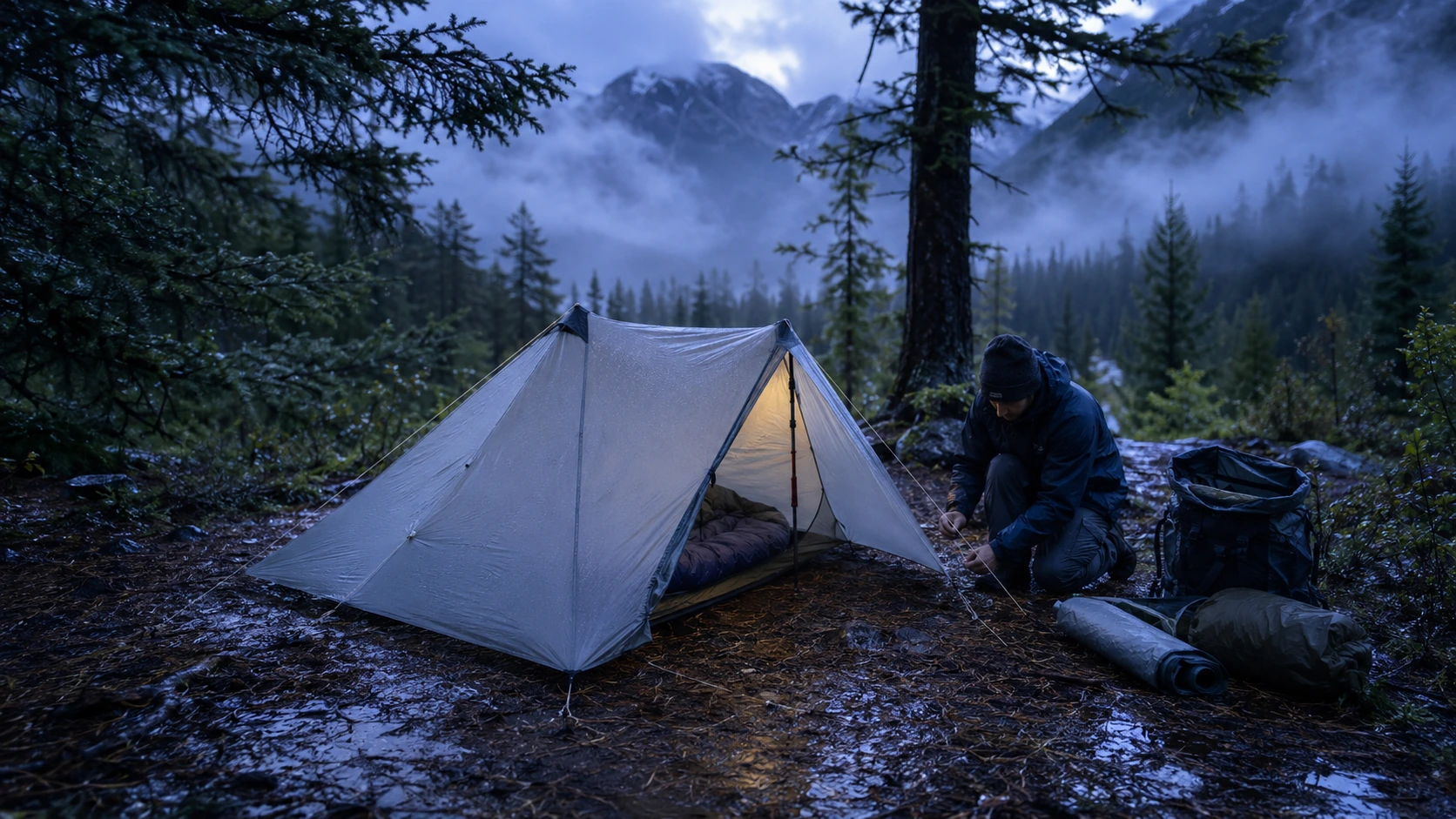
If your trips regularly involve prolonged rain, exposed ridgelines, or cold wind, lean toward a trekking-pole tent or mid. These designs give you more enclosed protection and make rough nights more manageable. A tarp can still work, but it demands better pitch skill and more forgiving site options.
For buggy summer conditions
In heavy mosquito season, many hikers underestimate how much bug pressure changes camp life. You are not just sleeping in the shelter. A full bug-protected ultralight shelter is often worth the small weight increase.
For dry climates and low bug pressure
This is where tarps shine. If your route is mostly dry, camps are easy to find, and bug pressure is low, a tarp can feel liberating. Airflow is excellent, views stay open, and your total shelter weight can get very low.
For difficult campsites
Some areas offer rocky ground, tiny platforms, exposed ledges, or uneven sites. That matters because many ultralight shelter types need a precise footprint and clean stake geometry. Before you buy, think about where you actually camp.
Miguel found this out in the White Mountains. He bought a roomy tarp after watching desert-focused videos, then discovered that tight, rough New England sites made his favorite pitch harder than expected. He switched to a compact trekking-pole tent, lost some openness, and gained far more reliable setup options.
Good campsite judgment helps every shelter. REI’s guide to how to choose a backcountry campsite is worth reading because site selection affects storm performance almost as much as shelter design.
Before you compare another shelter spec sheet, write down the three conditions that ruin your trips fastest: bugs, wind, rain, cramped sites, or condensation. That list should drive your choice.
Materials That Change Ultralight Shelter Performance
Materials affect weight, price, sag, packed size, and weather behavior. The main names you’ll see are silnylon, silpoly, Dyneema Composite Fabric, and newer composite fabrics. None is perfect, so the best choice depends on what tradeoffs you care about most.
Silnylon
Silnylon stays common because it is strong, widely available, and usually more affordable than premium fabrics. Its biggest weakness is sag when it gets wet, so your ultralight shelter may need re-tensioning during a damp night.
Silpoly
Silpoly has become popular because it sags less when wet. For many hikers, that single trait makes life easier in rainy climates. It is often a smart middle-ground fabric for a practical ultralight backpacking shelter.
Dyneema Composite Fabric
DCF is famous for extremely low weight and low water absorption. It also drives up cost fast, so the value depends on how much you care about shaving ounces and packing a shelter that does not hold water.
New composite fabrics
Newer composites aim to improve abrasion resistance and structure while staying light. They can be compelling, especially for premium tarps and trekking-pole shelters, but the overall shelter design still matters more than fabric buzzwords alone.
Material choice should support your use case. If you backpack mostly in humid climates, low sag may matter more than shaving a tiny amount of weight. If you are building a dream thru-hike kit and budget is wide open, DCF may be worth the premium.
Hidden Weight Traps in Any Ultralight Shelter Setup
This is where many buyers misread the category. The listed weight of an ultralight shelter often is not the trail-ready weight. Small extras pile up quickly, and they matter.
Start with stakes. Some shelters need six stakes. Others need ten or more for a strong pitch. Add extra guylines, repair tape, trekking poles, and optional liners, and the headline number starts to drift.
Then look at modular systems. A tarp by itself seems incredibly light, but you may still need a bug bivy, bathtub floor, and groundsheet. Suddenly the supposed ultralight shelter is no longer dramatically lighter than a single-wall trekking-pole tent.
Seam sealing is another common miss. Some shelters ship ready to go. Others require user seam sealing or an added service. That affects total ownership cost and how quickly the shelter is actually trip-ready.
Packed volume matters too. A shelter can be light but awkwardly bulky, especially once you include separate components. If your whole system becomes harder to pack, the experience can feel less streamlined than the spec sheet promised.
Use this checklist before you compare options:
- Base shelter weight
- Required stake count
- Trekking pole or dedicated pole requirement
- Need for bug inner, bivy, or groundsheet
- Seam sealing requirement
- Real packed size when all parts are included
REI’s ultralight backpacking basics is useful here because it reminds you to think in full systems, not isolated pieces of gear.
Build your shelter weight as a full trail-ready kit in a notes app before you buy. That five-minute exercise prevents a lot of expensive self-deception.
Common Ultralight Shelter Mistakes That Lead to Miserable Nights
The first mistake is choosing the lightest option before learning your own tolerance for exposure. Some hikers love open tarp camping. Others discover after one stormy night that they value enclosure much more than they thought.
The second mistake is underestimating condensation. Single-wall shelters, bivies, and low-airflow pitches can all create moisture issues. Condensation is manageable, but only if you expect it and choose a shelter with enough ventilation for your climate.
The third mistake is assuming every campsite will suit your shelter. Tarps and trekking-pole shelters often demand more from the ground than freestanding tents do. If your normal routes have hard-packed pads, roots, or tight forest sites, setup ease matters more.
The fourth mistake is failing to practice. An ultralight shelter should not get its first pitch at dusk in bad weather. A few backyard or park setups can eliminate most of the frustration people blame on the shelter itself.
The fifth mistake is buying for fantasy trips. It is easy to picture high, dry summer nights with perfect views. It is smarter to buy for your most common trips and your hardest realistic conditions.
A short pitching demo often teaches more than three paragraphs of explanation, so practice your chosen shelter a few times before it counts.
Best Ultralight Shelter Setups by Use Case
The best ultralight shelter setups become clearer when you match them to real hiker profiles. That is much more useful than pretending one shelter wins every category.
Beginner backpacker
The safest recommendation is a one- or two-person trekking-pole tent. It is the best ultralight shelter for backpacking when you want low weight without turning camp setup into a skill test every night.
Solo thru-hiker chasing lower base weight
A trekking-pole tent still makes sense for many thru-hikers, especially early on. Once your skills and tolerance are higher, a tarp plus bug bivy can become an efficient ultralight backpacking shelter.
Wet-climate hiker worried about condensation
Look hard at ventilation, fabric behavior, and pitch height. A well-ventilated trekking-pole tent or a modular mid with an inner can be a better ultralight shelter than a tiny bivy or low tarp.
Forest-route hiker considering a hammock
If your routes stay wooded and you already know you sleep well in a hammock, this can be a smart specialty setup. Just weigh the full system honestly before you call it ultralight.
Shoulder-season backpacker
A mid or stormworthy trekking-pole shelter often wins here. You want more margin for mixed weather, colder nights, and less forgiving camps. Shoulder season is not the best time to learn how much discomfort you can tolerate under a tiny tarp.
FAQ
What type of ultralight shelter is best for backpacking?
For most hikers, a trekking-pole tent is the best ultralight shelter for backpacking. It offers the best mix of low weight, bug protection, weather coverage, and livability across a wide range of three-season trips.
How do I choose between an ultralight tent vs tarp?
Choose a trekking-pole tent if you want easier weather protection and fewer compromises. Choose a tarp if you have stronger setup skills, lower bug pressure, and a higher tolerance for exposure and campsite variability.
Why do some ultralight shelters still feel heavy on trail?
Many listed weights exclude stakes, guylines, poles, seam sealing, groundsheets, or bug inners. When you total the full trail-ready system, the real carry weight can be much closer to a more protective shelter.
Which ultralight shelter types are best in bug season?
Trekking-pole tents and modular mids with full bug inners are usually the best options in heavy bug season. Tarps and bivy sacks can work, but they often make evenings less comfortable when insects are intense.
When should I use a bivy sack instead of a tent?
Use a bivy sack when tiny packed size and minimal weight matter more than comfort, and when you expect relatively manageable weather. For most general backpacking trips, a tent or tarp-plus-inner setup is easier to live with.
Conclusion
Choosing the right ultralight shelter in 2026 is not about chasing the smallest number on a product page. It is about matching protection, livability, and skill demand to the trips you actually take. For most hikers, that means a trekking-pole tent remains the smartest starting point because it handles the widest range of conditions with the fewest painful compromises.
Tarps, bivy sacks, hammocks, and modular mids all have real strengths. They work best when your routes, climate, and camping style line up with what those systems ask from you. Start with your common conditions, total up the true trail-ready weight, and be honest about how much setup complexity and exposure you want at the end of a long day.
If you are narrowing options now, decide from the field backward. Think about the bugs, wind, rain, and campsites you face most often, then choose the ultralight shelter that will help you sleep well there. That approach leads to better purchases and better mornings on trail.
Next Steps
- Sleep Systems Quilts Pads Guide 2026
- Quilt Vs Sleeping Bag 2026
- Trekking Pole Tents In Wind And Rain 2026
- Silpoly Vs Dcf Vs Silnylon 2026
Napište komentář