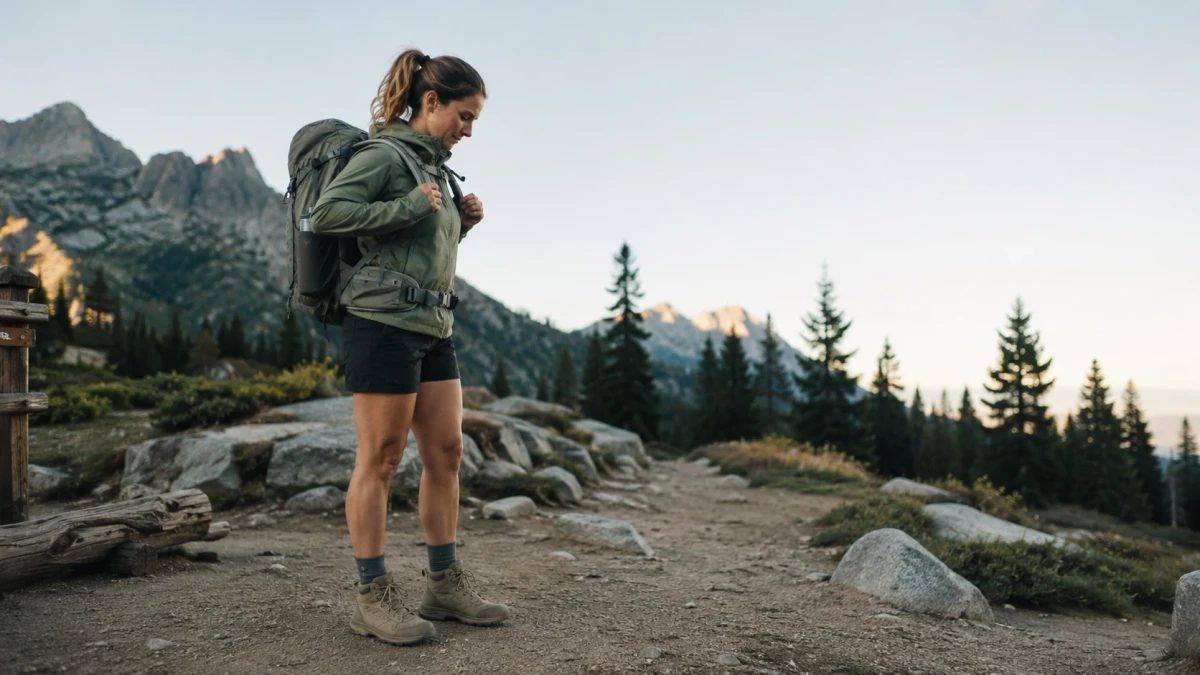
Part 01 of the HikeLab Ultimate Ultralight Guide Series.
What if the easiest way to make hiking feel better isn’t a new tent or lighter stove, but simply dropping a pound from your back? That’s why so many hikers start looking at the ultralight backpack category first. A lighter pack can make climbs feel smoother, long days feel shorter, and your whole kit feel more manageable. But there’s a catch: the wrong ultralight backpack can feel amazing at home and terrible once you add food, water, and a few miles.
If you’ve been staring at specs and wondering what actually matters, this guide is for you. You don’t need to memorize every fabric code or copy a thru-hiker’s gear list to make a smart choice. You do need a clear framework. In this beginner’s guide, you’ll learn how much an ultralight backpack should weigh, when framed beats frameless, how to choose the right size, and which mistakes make a light pack feel worse instead of better.
Key Takeaways
- Most hikers do best with an ultralight backpack that weighs about 1.5 to 2 pounds, not the absolute lightest model available.
- A framed ultralight backpack is usually the safer choice for beginners, longer food carries, and trips with water-heavy or bear-can loads.
- Capacity depends on gear bulk and trip demands more than trail mileage, so 40L, 50L, and 60L packs each have a clear use case.
- Fit matters as much as weight, because a well-fitted ultralight backpack can carry better than a lighter pack in the wrong size.
- Quick answer: An ultralight backpack usually weighs about 1.5 to 2 pounds for most hikers. Minimal frameless models can come in near 1 pound, but the right choice depends on your base weight, total carry weight, and whether you need a frame.
If you want to build the full system, pair this guide with The Ultimate Base Weight Guide, The Beginner Ultralight Gear List, and How to Pack a Backpack for Ultralight Hiking.
What Makes an Ultralight Backpack Worth It?
An ultralight backpack matters because it attacks one of the biggest weight savings in your whole kit. Traditional backpacking packs often weigh 3.5 to 5 pounds before you add anything inside. A smart ultralight backpack can cut that nearly in half without forcing you into an extreme setup.
That said, lighter is not automatically better. The real value comes when the ultralight backpack still carries your normal load well, fits your torso correctly, and matches your trip style. If it saves 12 ounces but gives you hot spots, sagging shoulders, or a miserable carry over 22 pounds, you bought the wrong tool.
This is the beginner trap. Many people shop by empty-pack weight first, then discover that pack structure, fit, and load range matter more than a flashy number on a product page. That’s why the best ultralight backpack is rarely the lightest one. It’s the one that disappears on your back because it matches the rest of your system.
Take Maya, a weekend hiker from Arizona. She replaced a 4-pound pack with a frameless ultralight backpack because the specs looked impressive. On her first desert trip, she started with four liters of water and three days of food, and by midday her shoulders were burning. She moved to a light framed 50L pack, gained a few ounces back, and finished her next trip with better balance and no shoulder pain.
If you’re shopping now, start with your real trail load instead of your dream setup.
How Much Should an Ultralight Backpack Weigh?
For most beginners, an ultralight backpack should weigh around 1.5 to 2 pounds. That range usually gives you a useful mix of structure, comfort, and durability without drifting back into standard backpack territory. Once you go much below that, you’re usually looking at more minimal padding, simpler suspension, or a frameless design that demands better packing discipline.
Here’s the simple threshold most new hikers need:
- Around 1 pound: very minimal ultralight backpack options, usually frameless or highly stripped down.
- Around 1.5 to 2 pounds: the sweet spot for many hikers who want a practical ultralight backpacking pack.
- Over 2.5 pounds: still possibly light, but you should ask whether you’re paying an ultralight price for a pack that behaves more like a conventional model.
Weight only matters in context. A 17-ounce pack can be brilliant for a hiker with a low base weight and short food carries. The same pack can feel awful for a beginner carrying a cold-weather sleep system and extra water.
Luis learned that on a section hike in Colorado. He brought a frameless pack that weighed barely over a pound, but his total carry hit 27 pounds after a long resupply. By day two, he was stuffing extra gear into outer pockets just to make it ride better. He swapped to a framed ultralight backpack for the next section and said the extra half-pound felt lighter on trail because the weight transfer finally worked.
If you want a quick way to evaluate any best ultralight backpack shortlist, ask one question first: what load does this pack carry well, not just survive? Good brands usually publish a comfort range. Read that number harder than the raw pack weight.
For current model roundups after you finish this guide, these resources are useful:
- GearJunkie’s ultralight backpack roundup
- Outdoor Life’s tested ultralight backpack guide
- Adventure Alan’s best ultralight backpack picks
Framed vs. Frameless Ultralight Backpack: Which Should You Choose?
If you only remember one buying rule, remember this: most beginners should start with a framed ultralight backpack. That’s especially true if your total pack weight often rises above 20 to 25 pounds, your trips vary a lot, or you’re still figuring out your packing system.
A framed ultralight backpack gives you more structure, better load transfer to the hips, and more forgiveness when your food or water load spikes. It also handles bulky gear better. That matters for newer hikers because your first kit is rarely compact. Even if your shelter and quilt are reasonably light, they may still take up more space than a veteran ultralight setup.
A frameless ultralight backpack works best when your base weight is already low, your packing is consistent, and you know how to build structure with the gear inside the pack. Frameless packs reward discipline. They punish sloppy loading, bulky gear, and wishful thinking.
Use this shortcut:
- Choose framed if you’re new, often carry more than a few days of food, hike in dry areas, or need a bear canister.
- Choose frameless if your gear is already compact, your total load stays modest, and you’re comfortable managing tradeoffs.
Erin’s story makes the point. She planned an early-season Sierra trip and wanted the lightest setup possible. Once she added a bear can, extra insulation, and a longer food carry, her 40L frameless idea stopped making sense. She rented a framed ultralight backpack around 55L instead, packed the canister cleanly, and avoided the last-minute gear explosion that ruins a lot of first trips.
If your question is really frameless vs framed ultralight backpack, think less about identity and more about margin. Beginners usually need more margin.
How to Choose an Ultralight Backpack Capacity: 40L, 50L, or 60L?
Pack size confuses people because volume is really about bulk, not just trip length. A one-night trip with a bulky budget sleeping bag can need more room than a three-night trip with compact gear. That’s why the right ultralight backpack for thru-hiking isn’t automatically the right pack for a beginner on weekend trips.
Here’s the practical breakdown.
40L ultralight backpack
A 40L pack works best when your gear is already compact and your trips are fairly controlled. Think summer weekends, short food carries, and low-bulk shelters and quilts. This can be a great size for experienced hikers, but beginners often outgrow it fast if they still use larger sleeping bags, cook kits, or extra clothing.
50L ultralight backpack
This is the sweet spot for many people. A 50L ultralight backpack handles weekend trips well, gives you room for shoulder seasons, and leaves enough margin for a newer kit without feeling huge. If you want one versatile answer to how to choose an ultralight backpack, start here.
60L ultralight backpack
A 60L model makes sense for longer food carries, colder conditions, desert water loads, or bear-can trips. It can also work well for a budget-conscious beginner whose gear is still a little bulky. Bigger is not always worse if the pack compresses well and still carries properly.
Before you buy, do a floor test. Put every item you expect to carry on the ground, including your food bag and water containers. If your first big trip includes a bear canister, test that too. This is the fastest way to avoid buying a beautiful pack that only works on paper.
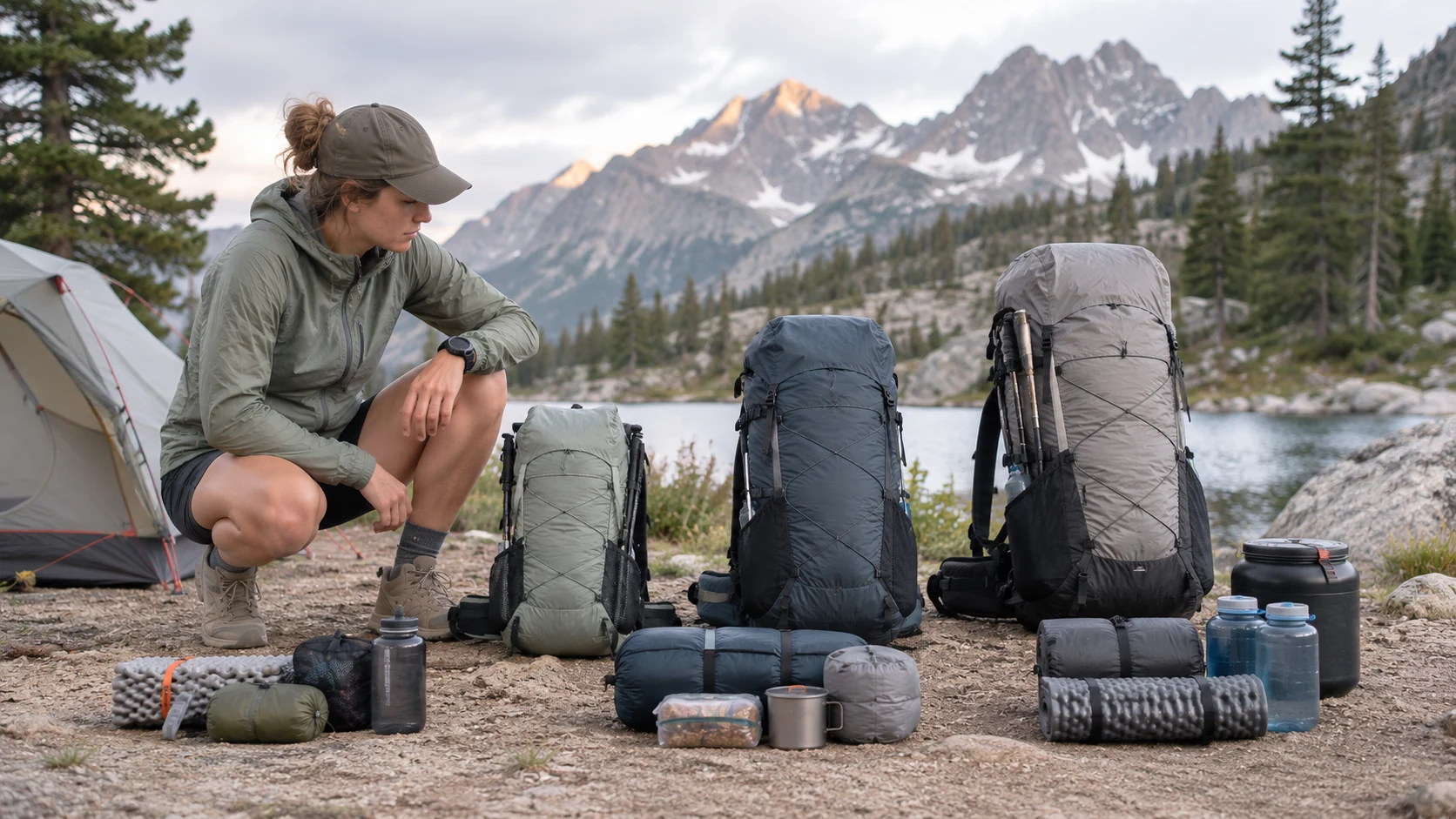
Measure your packed gear tonight before you compare another ten product pages. You’ll make a better decision in twenty minutes than you will from two more hours of browsing.
Ultralight Backpack Fit: Torso Length, Hip Belt, and Load Transfer
Fit is where a great ultralight backpack becomes a bad one. A poorly sized pack can make even a light load feel unstable, while a well-fitted pack can carry surprisingly well. Torso length matters more than overall height, and hip-belt fit matters more than most beginners expect.
Start with torso length. If the pack is too short, the shoulder straps may dig in and the hip belt won’t sit where it should. If the pack is too long, load transfer gets weird and the whole carry can feel sloppy. REI’s guide on how to size and fit a backpack is a useful starting point if you need a visual walkthrough.
Then look at the hip belt. In a properly fitted framed ultralight backpack, much of the load should settle onto your hips, not hang from your shoulders all day. Shoulder straps stabilize the carry. They should not do all the work.
Load lifters and sternum straps matter too, but they fine-tune the fit. They don’t rescue a pack that is the wrong size. A store test with 20 pounds tells you more than any review paragraph.
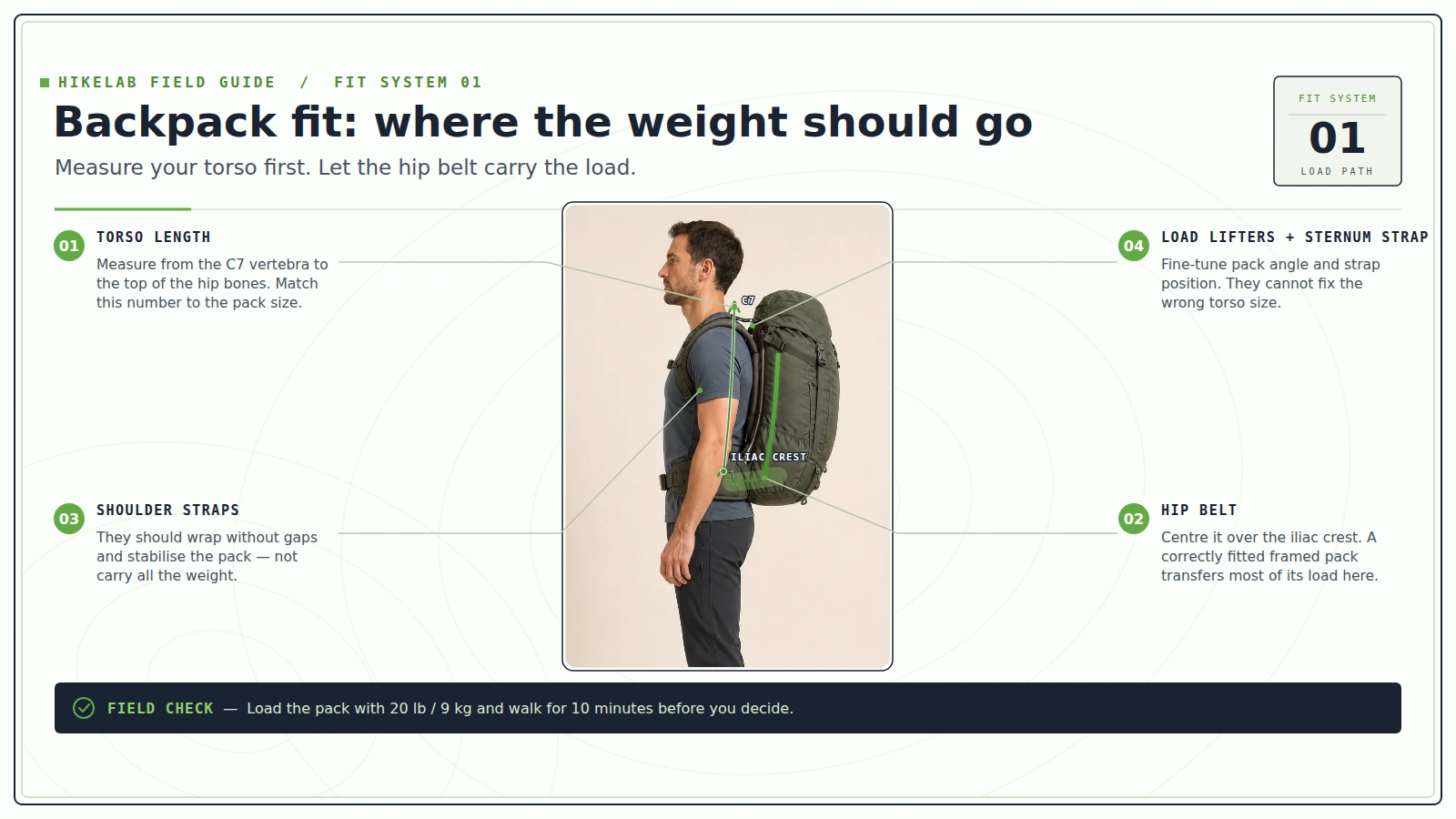
If you’re between sizes, don’t guess. Check the brand’s size chart, then load the pack and test it. That boring step prevents a lot of expensive returns.
Ultralight Backpack Materials: Dyneema, Ultra, Robic, and Mesh
Materials matter, but not in the way marketing often suggests. Beginners usually don’t need the most exotic fabric. They need a material that balances weight, durability, and price for the places they hike.
Dyneema composite fabrics
Dyneema-based builds are famous for low weight and water resistance. They’re popular in premium ultralight backpack circles, especially for long-distance hiking. They also cost more, and not every Dyneema build resists abrasion equally well in rough off-trail terrain.
Ultra fabrics
Ultra has become a big talking point because it offers an appealing mix of low weight, abrasion resistance, and structure. Many hikers see it as a strong premium option for a best ultralight backpack shortlist, especially if they want durability without going back to heavier designs.
Robic nylon
Robic is less glamorous, but it remains a very sensible choice. It’s usually more affordable, familiar, and forgiving for hikers who don’t want cottage-brand prices. A well-designed Robic ultralight backpack can be an excellent first purchase.
Stretch mesh and pocket materials
Pocket mesh often fails before the main body fabric does. If you bushwhack, scrape against rock, or stuff wet gear aggressively, pay attention here. Great side and rear pockets are useful, but they are also common wear points.
The right question is not “Which fabric is best?” It’s “Which fabric fits my budget, terrain, and abuse level?” If you mostly hike on maintained trails and want value, a Robic pack may make more sense than a premium Ultra build. If you expect a hard thru-hike and want weather resistance plus durability, a higher-end fabric may be worth it.
Best Ultralight Backpack Setups by Hiker Type
The best ultralight backpack depends on who you are and how you hike. A few use cases make that clearer than another list of brand names.
Weekend backpacker
A newer weekend hiker usually does best with a framed 45L to 55L ultralight backpack. This gives enough room for a realistic kit and enough support for uneven loading. It also leaves space to improve the rest of your setup over time without forcing an immediate pack upgrade.
Thru-hiker or aspiring long-distance hiker
An ultralight backpack for thru-hiking often lands in the 40L to 55L range, depending on food carries and how dialed the rest of the kit is. Many long-distance hikers use framed packs at first, then move toward frameless once their system gets smaller and more predictable.
Budget-conscious beginner
Don’t chase the lightest cottage-brand pack right away. A slightly heavier but still light framed pack can be the smartest first buy. If the design carries well and fits correctly, you’ll learn more from hiking in it than from overspending on a too-minimal setup.
Desert hiker or bear-can traveler
This is where small capacity fantasies usually die. Extra water or a bear canister changes everything. A framed 50L to 60L ultralight backpack often makes more sense because the load spikes are real, even if the rest of your gear is fairly light.
If you’re buying one pack for everything, choose the option that handles your hardest common trip, not your easiest ideal trip.
Common Ultralight Backpack Mistakes That Make a Light Pack Feel Worse
The biggest mistake is buying the pack before the rest of the system. Your sleep kit, shelter, and clothing volume decide how much space you need. Your base weight and trip conditions decide how much structure you need. Reverse that order and you’ll likely buy twice.
The second mistake is underestimating real trail loads. Food, water, cold-weather layers, and bear-can requirements change the feel of an ultralight backpack fast. A pack that carries well at 17 pounds may feel terrible at 24.
The third mistake is poor packing. Frameless models especially need careful loading, with soft items building structure and dense items placed close to your back. Even a framed ultralight backpack feels better when you keep heavy gear centered instead of hanging it far from your body.
The fourth mistake is ignoring fit. Many beginners blame the concept of ultralight gear when the real issue is simply the wrong size. If the torso length is off, no amount of strap fiddling will make the pack feel right.
The fifth mistake is assuming expensive means beginner-friendly. Some of the best ultralight backpack options for experts are actually bad first choices because they leave so little margin for error. That doesn’t make them bad packs. It makes them specialized tools.
Before you click buy, ask yourself four questions:
- What is my normal base weight?
- What is my heaviest likely total carry?
- How bulky is my current gear?
- Do I need framed support for water, food, or a bear can?
If you can answer those clearly, you’re already ahead of most first-time buyers.
FAQ
How do I choose an ultralight backpack as a beginner?
Start with your base weight, then check your heaviest likely total load with food and water. Most beginners should choose a framed 45L to 55L ultralight backpack because it offers more comfort and forgiveness while you dial in the rest of your gear.
What is a good weight for an ultralight backpack?
For many hikers, a good ultralight backpack weighs about 1.5 to 2 pounds. Frameless options can be lighter, but they usually work best when your full carry stays modest and your packing system is already refined.
Why does my ultralight backpack still feel uncomfortable?
The usual reasons are too much total weight, poor fit, sloppy packing, or using a frameless design before your gear is ready for it. A light pack can still feel bad if the load transfer is poor or the pack is overloaded.
Which size ultralight backpack is best: 40L, 50L, or 60L?
Choose 40L for compact summer setups, 50L for general versatility, and 60L for longer carries, colder trips, desert water loads, or bear-can use. The right choice depends more on gear bulk and load spikes than on simple trip length.
When should I switch from a framed to a frameless ultralight backpack?
Switch when your base weight is consistently low, your gear packs compactly, and your normal carry stays within the comfort range of frameless designs. If your load still swings a lot from trip to trip, a framed ultralight backpack is usually the better tool.
Conclusion
Choosing an ultralight backpack in 2026 does not have to be confusing. The core decision is simple: match the pack to your real load, your actual gear bulk, and the trips you really take. For most beginners, that means a framed ultralight backpack in the 45L to 55L range, around 1.5 to 2 pounds, with a fit you’ve tested under weight.
The best move now is not to chase the lightest spec sheet. Measure your torso, lay out your kit, estimate your heaviest carry, and buy for that reality. Do that, and your first ultralight backpack will feel like an upgrade instead of a lesson. If you’re narrowing down options today, use this framework first, then compare current models from trusted roundups and fit guides.
Next Steps
- Ultimate Base Weight Guide 2026
- Beginner Ultralight Gear List 2026
- Pack Volume Guide 2026
- How To Pack A Backpack Ultralight 2026
Napište komentář