Part 02 of the HikeLab Ultimate Ultralight Guide Series.
You can shave half a pound from your kit and still make the wrong call.
That happens all the time with ultralight gear materials. A tent that looks perfect on a spec sheet can sag in cold rain. A pack fabric that seems bombproof can feel stiff, loud, or overpriced for the miles you actually hike.
Most hikers have made this mistake at least once. You read the product page, see a sexy fabric name, notice a few saved ounces, and assume newer must mean better. Then the real test starts: rain on day two, granite on day three, sun damage by late summer, and repair decisions when something fails far from home. That’s when material choice stops being trivia and starts affecting comfort, confidence, and total gear cost.
If you want to build the full system, pair this guide with Ultralight Backpack Guide, Ultralight Tent & Shelter Guide, and Silpoly vs DCF vs Silnylon.
If you’ve ever stared at terms like Dyneema, X-Pac, silpoly, Robic, and UHMWPE and thought, “Just tell me what to buy,” you’re in the right place. This guide breaks down the major material families, compares the best fabrics for shelters and packs, and shows you the tradeoffs that matter after week one on trail. By the end, you’ll know which materials make sense for your gear, your climate, and your budget.
You do not need to become a textile engineer to make a smart call. You just need a clear framework for what each fabric does well, where it struggles, and when the upgrade is actually worth the money.
Key Takeaways
- The best ultralight gear materials depend on the item: DCF, silpoly, and silnylon lead shelters, while Ultra, Ecopak, X-Pac, and Robic dominate packs.
- The lightest fabric is not always the best value. Wet stretch, delamination, UV exposure, noise, and repairability often matter more over time.
- Newer materials like Dyneema Woven Composites, UltraTNT, and PFAS-free fabrics such as Big Agnes HyperBead are reshaping the market in 2026.
- A smart fabric choice starts with trip style, weather, expected abuse, and budget, not just grams per square yard.
Why Ultralight Gear Materials Matter More Than Spec-Sheet Weight
Material choice drives how your gear behaves in the real world. Weight matters, but so do shape retention, abrasion resistance, waterproofing, packability, and how easily you can fix gear on trail.
That’s why two tents with nearly identical listed weights can feel completely different in use. One may stay taut through an all-night storm. The other may puddle, flap, and need a midnight guyline reset.
The same goes for packs. A light laminate can resist water far better than a basic woven nylon, but it may also cost more and age differently under heavy abrasion. That’s the heart of any ultralight backpack fabric comparison: the winner changes based on where and how you hike.
Maya learned that on a soggy week in Washington. She bought the lightest shelter fabric she could afford, then spent three rainy nights wiping condensation and re-tensioning a shelter that stretched as it got wet. She finished the trip, but upgraded to silpoly before her next section hike and stopped chasing the lowest listed weight.
If you’re comparing shelter materials right now, pause before you buy the lightest option. Look at the miles, weather, and repair options you’ll actually face.
The 3 Families of Ultralight Gear Materials
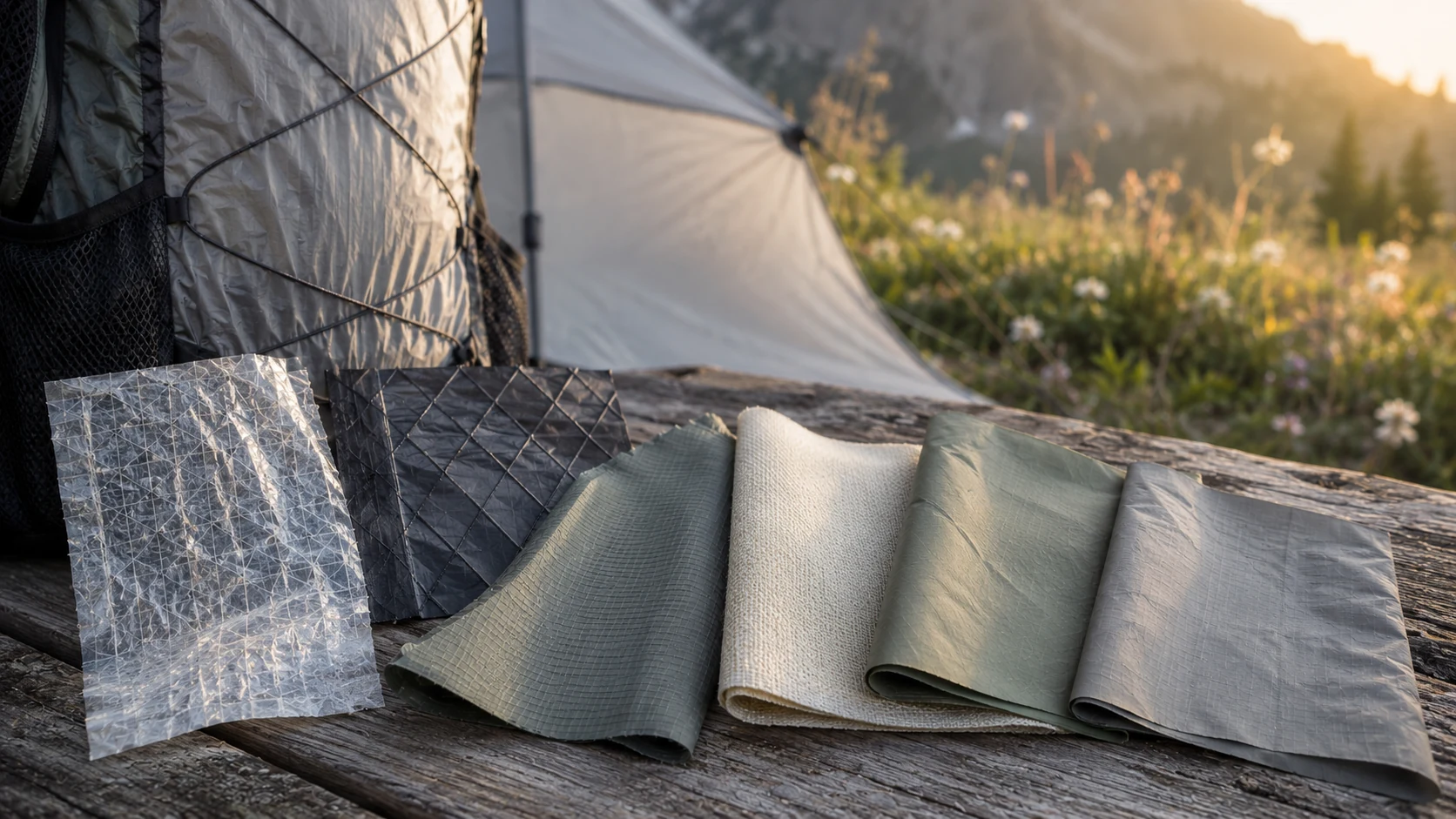
Most ultralight gear materials fall into three buckets: woven fabrics, coated fabrics, and composite or laminate fabrics.
Woven fabrics use interlaced yarns. Think ripstop nylon, Robic, and many pack face fabrics. They’re often flexible, durable for the price, and easy to sew or repair. The downside is that woven fabrics alone are not usually fully waterproof.
Coated fabrics start with a woven base and add a coating or treatment. Silnylon and silpoly are the classic examples for shelters. They balance low weight, solid weather protection, and relatively reasonable cost, which is why they still show up in so many tents and tarps.
Composite or laminate fabrics stack multiple layers with films, scrims, or reinforcement grids. DCF, X-Pac, Ultra, Ecopak, and newer Dyneema Woven Composites all fit here in different ways. These fabrics often offer excellent waterproofing and low stretch, but they can come with tradeoffs in price, stiffness, long-term laminate aging, or repair method.
This is also where terms like UHMWPE ultralight gear show up. UHMWPE stands for ultra-high-molecular-weight polyethylene, the fiber family behind Dyneema and many Ultra fabrics. It’s prized because it delivers very high strength for very low weight.
Understanding the family first makes the brand names easier.
What Are the Best Ultralight Gear Materials?
The best ultralight gear materials depend on the item. For shelters, DCF, silpoly, and silnylon lead. For packs, Ultra, Ecopak, X-Pac, and Robic are the main players. For insulation, high-fill-power down and Climashield Apex stand out. The right choice depends on weight, durability, weather resistance, and budget.
| Gear Type | Best Materials | Best For | Main Watch-Out |
|---|---|---|---|
| Tents and tarps | DCF, silpoly, silnylon, UltraTNT | Weight savings and weather protection | Cost, wet stretch, noise, puncture resistance |
| Backpacks | Ultra, Ecopak, X-Pac, Robic, gridstop | Abrasion resistance and structure | Delamination risk, stiffness, price |
| Insulation | 850-950 fill down, Apex synthetic | Warmth-to-weight | Moisture performance or bulk |
| Frames and hardware | Carbon fiber, titanium, aluminum | Strength with low weight | Cost, brittleness, comfort tradeoffs |
Shelter Fabrics Compared: DCF vs Silnylon vs Silpoly vs UltraTNT
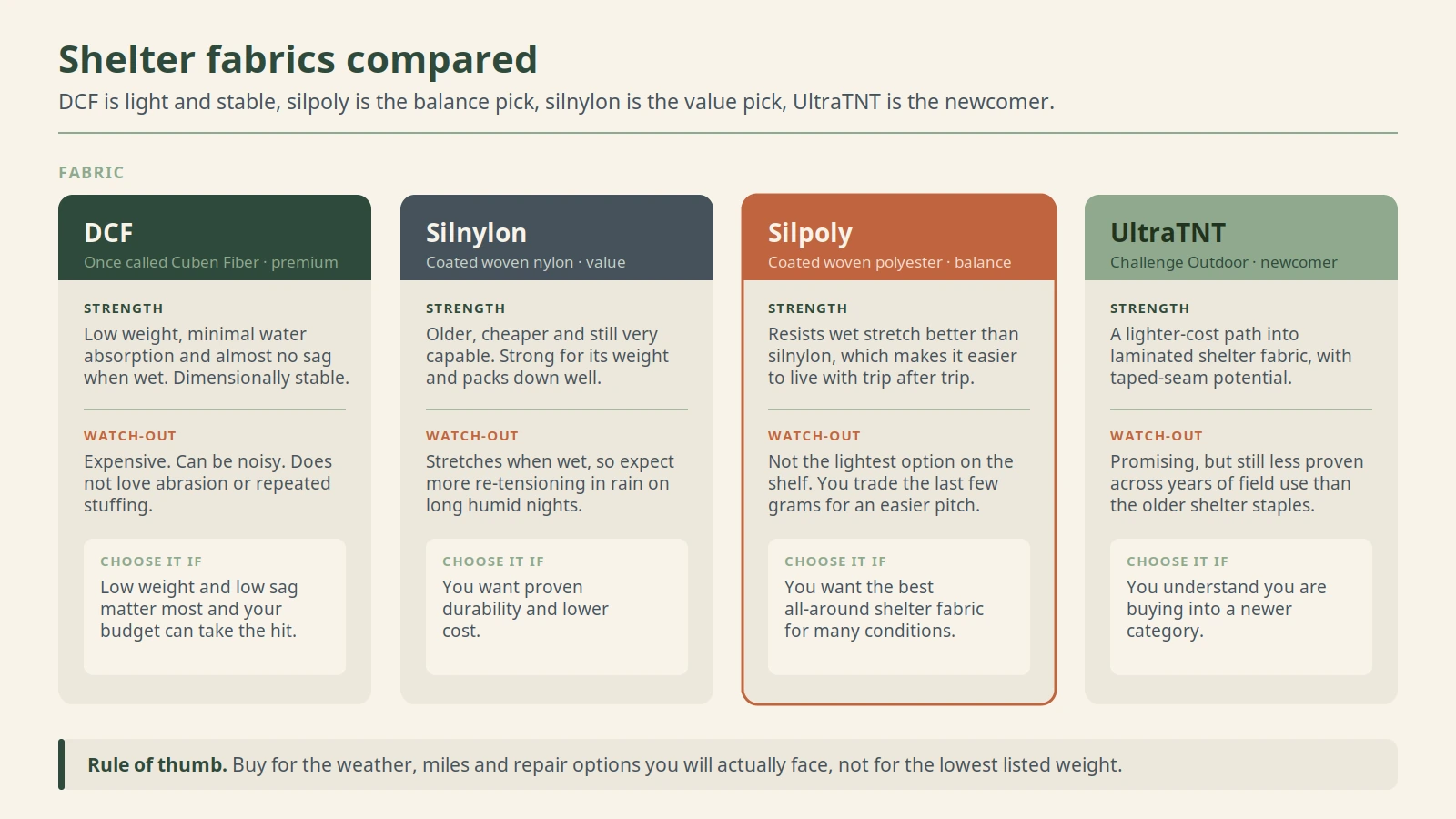
If you want the shortest answer to DCF vs silnylon vs silpoly, here it is: DCF is light and dimensionally stable, silpoly is the best balance for many hikers, and silnylon is still a strong value pick when you need toughness and lower cost.
DCF, once called Cuben Fiber, remains the premium shelter choice for hikers who want low weight, minimal water absorption, and almost no sag when wet. That’s why it’s still common in high-end trekking-pole shelters. But it’s expensive, can be noisy, and does not love abrasion or repeated stuffing the way some buyers expect.
Silnylon is older, cheaper, and still very capable. It tends to be strong for its weight and packs down well, but it can stretch when wet. That means more re-tensioning in rain, especially on long humid nights.
Silpoly has gained ground because it resists wet stretch better than silnylon. That one trait makes it easier to live with for many backpackers. If you care more about hassle-free pitching than saving the last few grams, silpoly often lands in the sweet spot.
Then there’s UltraTNT, a newer option from Challenge Outdoor that aims to offer a lighter-cost path into laminated shelter fabric. It has drawn attention because it can deliver low weight and taped-seam potential without full DCF pricing. It is promising, but it’s still less proven across years of field use than the older shelter staples.
Tarptent’s current tent lineup already separates UltraTNT models from Dyneema models, which shows how quickly this category is becoming a real buying decision instead of a niche experiment.
Chris found that out before a windy Colorado fastpack. He wanted DCF, but the price pushed him toward a silpoly shelter from a cottage brand. After eight nights of mixed wind and afternoon storms, he came home relieved, not disappointed. He saved several hundred dollars, kept a tight pitch, and used that budget on a warmer quilt.
If you’re shopping for a shelter today, use this simple rule:
- Choose DCF if low weight and low sag matter most and your budget can take the hit.
- Choose silpoly if you want the best all-around shelter fabric for many conditions.
- Choose silnylon if you want proven durability and lower cost.
- Choose UltraTNT only if you understand you’re buying into a newer category with less long-term field history.
Pack Fabrics Compared: Ultra, Ecopak, X-Pac, Robic, Gridstop, and Dyneema
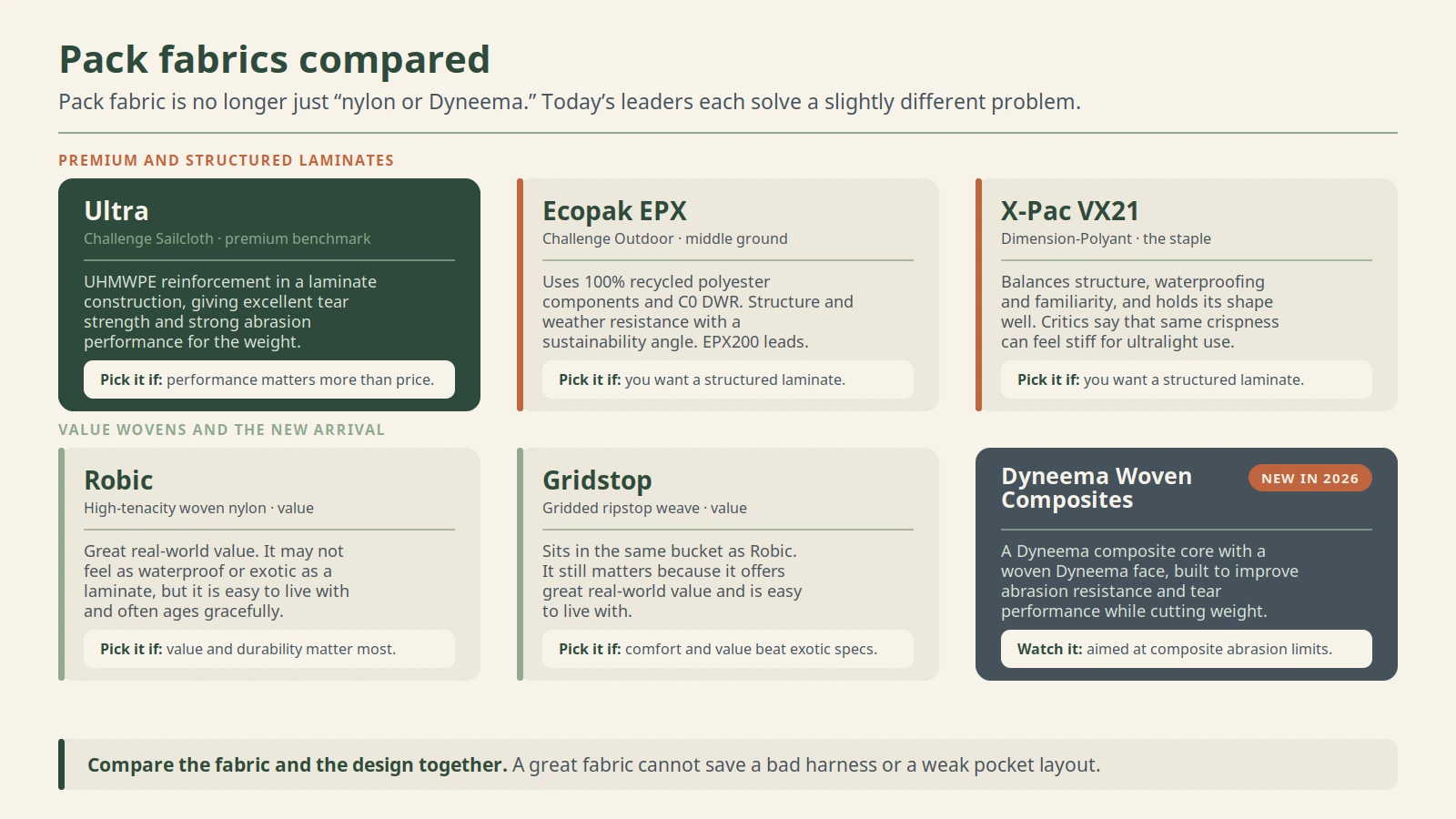
The best ultralight backpack materials are no longer just “nylon or Dyneema.” Pack fabrics have diversified fast, and today’s leaders each solve a slightly different problem.
Ultra fabrics from Challenge Sailcloth are a major reason many modern packs feel lighter and tougher than older designs. Ultra uses UHMWPE reinforcement in a laminate construction, which gives it excellent tear strength and strong abrasion performance for the weight. For many hikers, it’s the current benchmark for premium pack fabric.
Ecopak EPX targets a different kind of buyer. It uses 100% recycled polyester components and C0 DWR, which makes it appealing if you want structure, weather resistance, and a sustainability angle without going all the way into Ultra pricing. EPX200 in particular has become a common middle-ground choice.
X-Pac VX21 remains a staple because it balances structure, waterproofing, and familiarity. It tends to hold shape well and looks clean, which many pack makers like. Its fans love the crisp feel. Its critics say that same crispness can feel stiff and overbuilt for some ultralight use cases.
Robic and gridstop fabrics still matter because they offer great real-world value. They may not feel as waterproof or exotic, but they’re easy to live with and often age gracefully.
Dyneema itself is also evolving. In June 2026, Dyneema announced Dyneema Woven Composites, combining a Dyneema composite core with a woven Dyneema face. According to the company’s June 30, 2026 release, the new construction was built to improve abrasion resistance and tear performance while cutting weight. That matters because classic composite fabrics have long been loved for low weight but criticized for abrasion limits.
Leo switched from a Robic pack to an Ultra pack before his Arizona Trail section. His old pack had survived years of weekend use, but the new one shed light rain better and showed less wear after bushy miles in thorny terrain. He paid more up front, but the upgrade made sense for his use case.
If you’re chasing the best ultralight backpack materials, think like this:
- Pick Ultra if performance matters more than price.
- Pick Ecopak or X-Pac if you want a structured laminate with strong all-around performance.
- Pick Robic or gridstop if value, comfort, and proven durability matter most.
If you’re about to buy a new pack, compare the fabric and the design together. A great fabric can’t save a bad harness or a weak pocket layout.
Beyond Fabric: Insulation, Foam, Titanium, Carbon Fiber, and Aluminum
A true guide to ultralight gear materials has to go beyond fabric because weight lives everywhere in your kit.
For insulation, high-fill-power down still leads on warmth-to-weight. That’s why premium quilts and sleeping bags keep using 850 to 950 fill down. The weakness is moisture. Once it gets wet, loft drops and warmth can go with it.
Synthetic insulation still has a job, especially in damp climates and for hikers who don’t want delicate care routines. Climashield Apex remains popular because it performs when wet and works well in quilts and insulated layers, even if it packs bulkier than down.
Foam matters too. EVA foam dominates sit pads, minimalist back panels, and many ultralight sleeping pads because it’s simple, light, and hard to kill.
For cookware and small hardware, titanium keeps winning because it is light, corrosion-resistant, and strong enough for repeated use. The catch is cost. For pack frames, trekking poles, and some tent parts, aluminum still gives many hikers the best balance of strength, repairability, and price.
Carbon fiber can save meaningful weight in tent poles, stakes, trekking poles, and pack stays. But it can also fail more abruptly than aluminum in some use cases.
The Hidden Tradeoffs Most Buyers Miss
This is where most buying guides get too polite.
The real problem with many ultralight gear materials is not that they are bad. It’s that buyers only hear the upside.
Delamination affects many laminate-style fabrics over time. A fabric can start out crisp, waterproof, and impressive, then age differently after abrasion, folding, UV, and heavy use.
Wet stretch matters mostly in shelters. Silnylon is the classic example. If you hate midnight adjustments, don’t ignore this point.
Noise sounds trivial until you sleep in wind. Some composite shelter fabrics are louder and crinklier than woven alternatives. If you are a light sleeper, that alone can change your choice.
UV exposure quietly shortens lifespan. Sun, altitude, and long desert trips punish fabrics and coatings. A tent that looks amazing in a garage test can age fast on a multi-month trail.
Repairability changes value per mile. DCF can be patched easily in the field with the right tape. Woven nylon can often be sewn, patched, or babied along. Some laminates are harder to repair cleanly once they start aging.
Packability matters too. A shelter or pack that fights your packing routine every morning adds friction you’ll notice long before you notice a tiny lab advantage.
If your current gear is failing in only one area, replace for that problem. Don’t pay premium prices for every advanced material at once.
How to Choose Ultralight Gear Materials for Your Trip, Climate, and Budget
Start with where you hike, not what the internet praises.
If you backpack in wet climates, prioritize low water absorption, low wet stretch, and easy drying. Silpoly shelters, laminated pack fabrics, and synthetic insulation deserve a longer look.
If you hike in dry, abrasive terrain, focus on abrasion resistance and UV durability. Ultra, Robic, and tougher woven faces can make more sense than the lightest possible composite.
If you’re a weekend hiker, value often beats bleeding-edge tech. You may not need the most advanced material on the market. A solid silpoly shelter and a Robic or X-Pac pack can perform for years.
If you’re planning a thru-hike, your math changes. Weight matters more because thousands of steps magnify every ounce. But long-distance value still depends on weather range, likely abuse, and how easily you can repair or replace gear on route.
Sustainability also belongs in the decision. Big Agnes has pushed PFAS-free tent fabrics with HyperBead, while Ecopak has gained attention for recycled polyester components and C0 DWR. That does not make every newer fabric the right choice, but it gives buyers more low-impact options than they had a few years ago.
Durability still matters most in the long run. A pack or shelter you trust for five seasons is usually the better environmental choice than one you replace after one hard year.
Use this quick framework:
- Buy for your worst expected conditions, not your best-case weather forecast.
- Spend first on the gear categories where material choice changes performance the most.
- Pay extra for premium fabrics only when the upgrade solves a real problem for your hiking style.
Nina used that approach before her John Muir Trail trip. Instead of buying a full premium kit, she kept her down quilt, upgraded to a lighter pack fabric, and chose a shelter material better suited to afternoon storms. She cut weight where it counted and finished with fewer regrets than friends who chased every new fabric release at once.
If you’re narrowing down a shelter or pack this week, write down your top three priorities in order: weight, weather resistance, durability, or budget. That will eliminate half the options immediately.
FAQ
How do I choose between DCF, silnylon, and silpoly?
Choose DCF for the lowest weight and least wet sag, silpoly for the best all-around balance, and silnylon for lower cost and strong durability. Your weather and budget matter more than hype.
What are the best ultralight backpack materials right now?
Ultra, Ecopak, X-Pac, and Robic are the main contenders. Ultra leads for premium performance, while Robic remains one of the best values.
Why do some ultralight pack fabrics delaminate?
Many advanced pack fabrics are laminates with multiple bonded layers. Repeated abrasion, folding, UV exposure, and long-term stress can weaken those bonds over time.
Which ultralight gear materials are best for wet climates?
Silpoly shelters, laminated pack fabrics, and synthetic insulation usually perform best in persistent rain and humidity. They absorb less water and often require less maintenance on trail.
When should I pay extra for premium ultralight materials?
Pay more when the material directly solves a problem you actually have, such as wet-sag shelters, heavy pack wear, or constant rain. If you mostly do fair-weather weekend trips, mid-priced materials often deliver better value.
Conclusion
The biggest mistake in ultralight buying is treating materials like a leaderboard. There is no single winner across every trip, every climate, and every budget. The best ultralight gear materials are the ones that match how you hike, where you hike, and what you need your gear to survive.
For shelters, most hikers should start by comparing DCF, silpoly, and silnylon honestly. For packs, Ultra, Ecopak, X-Pac, and Robic each make sense for different reasons. Beyond that, insulation, foam, metals, and frame materials shape your total system more than many gear lists admit.
Use this guide as a filter, not just a fabric glossary. Pick the materials that solve your real trail problems, skip the ones that only sound impressive, and build a kit you’ll still trust after the novelty wears off. If you’re shopping now, compare one shelter and one pack side by side using the framework above, then make the lightest smart choice, not just the lightest possible one.
Next Steps
- Ultralight Backpack Guide 2026
- Ultralight Tent Shelter Guide 2026
- Silpoly Vs Dcf Vs Silnylon 2026
- Pack Testing Gear Longevity 2026
Napište komentář