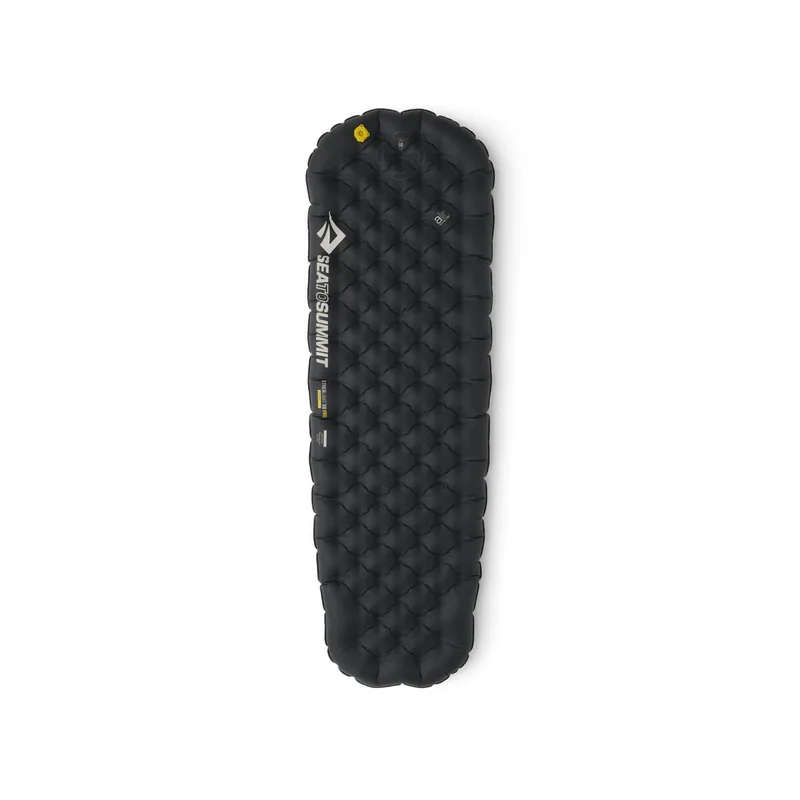
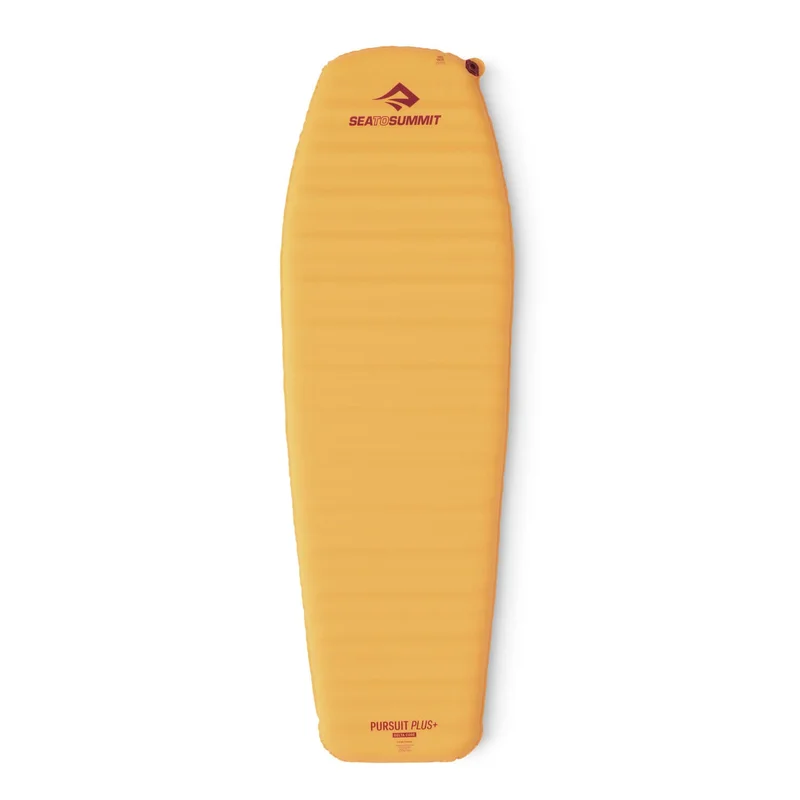
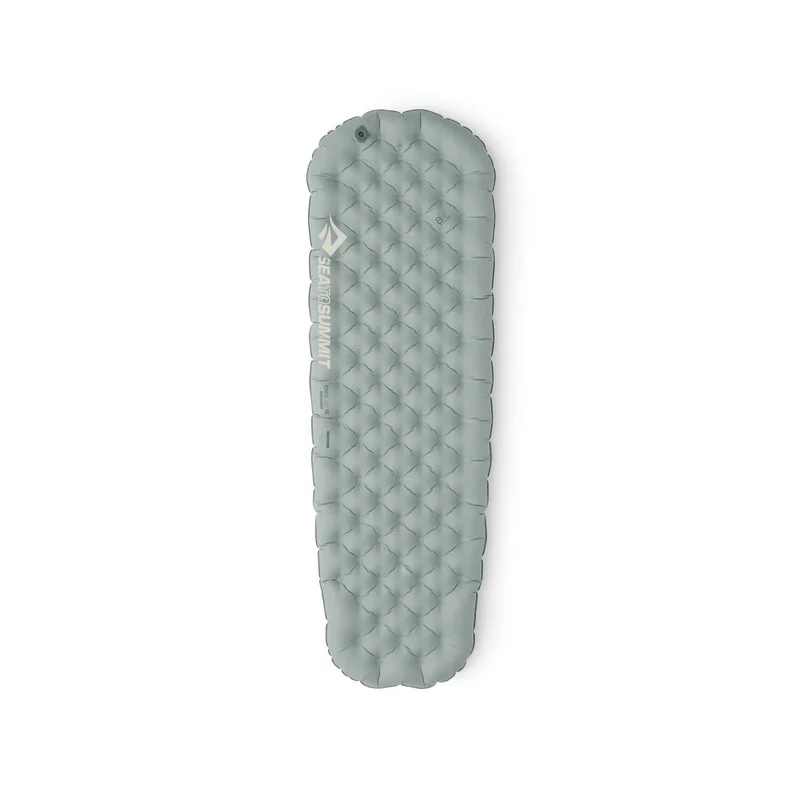
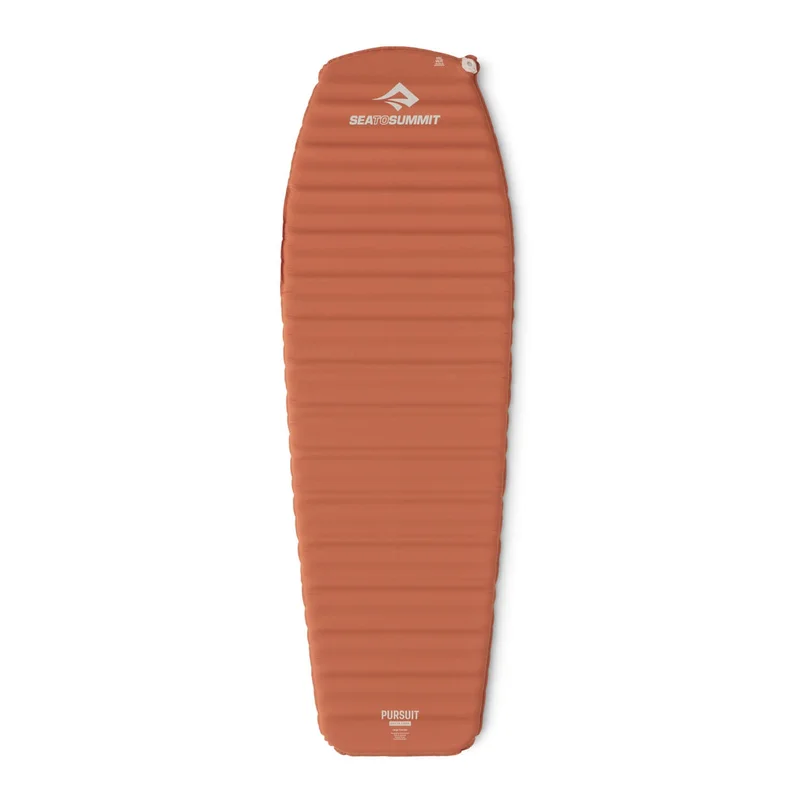
The Sea to Summit UltraLight Self-Inflating Sleeping Mat pairs open-cell Delta Core-V foam with a valve that pulls in air on its own once opened — a few extra breaths get it to full firmness, unlike pure air pads needing dozens of breaths or a pump. An ASTM R-value of 2.6 puts it in two-season territory: fine for spring through early autumn, not enough for sustained sub-zero nights.
At 2.5 cm thick, it's on the thinner side compared with modern air pads, so comfort relies more on foam cushioning than on an air cell's give — better suited to back and side sleepers without especially sensitive hips or shoulders. The X-Small variant reviewed here, 124.5 × 50.8 cm, covers only the torso, meaning a pack or clothing has to fill in for leg insulation.
The advantage of self-inflating foam is predictability: a small leak still leaves the foam holding its shape, whereas a pure air pad deflates completely on failure. That reliability costs a bulkier pack size, 28 × 11 cm, and higher weight than top-end ultralight air pads.