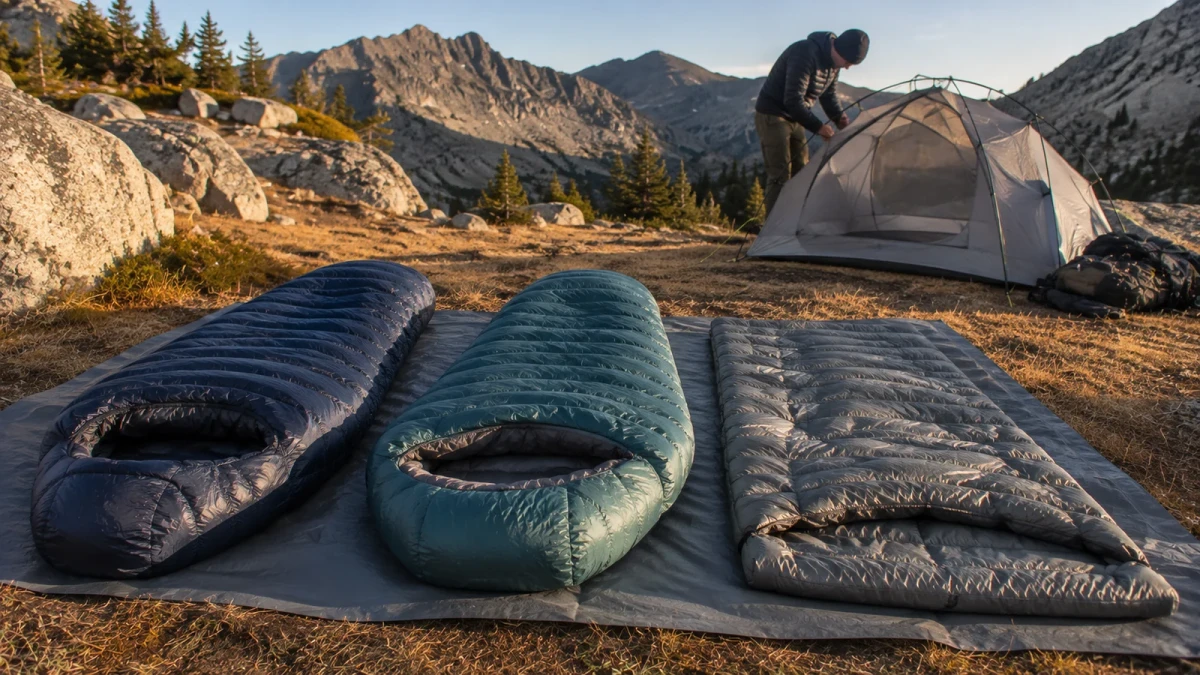
Part 42 of the HikeLab Ultimate Ultralight Guide Series.
If two bags both say 20F, why does one feel trail-ready while the other has you sleeping in every layer you packed? That question is why shopping for the best ultralight sleeping bags 2026 can get weird fast. The lightest option on paper is not always the smartest buy on trail, especially if you sleep cold, roll onto your side, or camp in shoulder season.
The good news is you do not need to memorize every spec sheet to buy well. You just need to know which bags actually balance warmth, weight, fit, and packability for the trips you take. In this guide, I’ll break down the best ultralight backpacking sleeping bag picks for different hikers, explain what counts as truly ultralight in 2026, and show you how to choose a bag that keeps you warm without wasting ounces.
Key Takeaways
- A true 20 degree ultralight sleeping bag is still the safest one-bag choice for most three-season backpackers.
- Narrow mummy bags save the most weight, but side sleepers usually do better in a slightly roomier cut.
- Fill power matters, but fill weight, ISO ratings, and your sleeping pad matter just as much.
- Quilts can be lighter, but a real sleeping bag is usually easier to manage in wind, cold, and variable mountain weather.
Best ultralight sleeping bags 2026 at a glance
Here’s the fast answer if you want the best ultralight sleeping bags 2026 without reading every detail first.
| Pick | Best for | Temp rating | Weight |
|---|---|---|---|
| Feathered Friends Hummingbird UL 20 | Best overall | 20F | 1 lb 7.9 oz |
| Western Mountaineering UltraLite | Best one-bag 3-season pick | 20F | 1 lb 13 oz |
| Sea to Summit Spark 30 | Lightest sleeping bag for backpacking | 30F | 1 lb 1.4 oz |
| NEMO Riff 30 | Best for side sleepers | 30F | 1 lb 14 oz minimum |
| REI Co-op Magma 30 | Best value | 30F | 1 lb 8.4 oz |
| Feathered Friends Swift UL 20 | Best for cold sleepers | 20F | 1 lb 13 oz |
| Feathered Friends Tanager 20 CFL | Best hoodless option | 20F | 18.9 oz |
- Feathered Friends Hummingbird UL 20, best overall for ounce-counters who still want a real hooded mummy bag.
- Western Mountaineering UltraLite, best if you want one premium bag for most spring, summer, and fall trips.
- Sea to Summit Spark 30, best if your priority is the lightest sleeping bag for backpacking in milder weather.
- NEMO Riff 30, best if narrow mummy bags make you feel trapped.
- REI Co-op Magma 30, best value if you want strong warmth-to-weight without cottage-brand pricing.
- Feathered Friends Swift UL 20, best if you sleep cold or want more room without jumping to a heavy bag.
- Feathered Friends Tanager 20 CFL, best for experienced ultralight hikers who can live without a zipper or hood.
If you only want one bag for most trips, start your shortlist with the true 20F models, not the summer-first 30F bags.
Best ultralight sleeping bags 2026 by sleeper type and trip style
The best ultralight sleeping bag depends less on hype and more on how you actually sleep. That is why the best ultralight sleeping bags 2026 are really several different answers, not one universal winner.
The Feathered Friends Hummingbird UL 20 is the best ultralight sleeping bag for hikers who want a premium 20F bag that stays impressively light. Its narrow cut, 950+ fill power down, and regular weight of 1 pound 7.9 ounces make it the kind of bag that disappears into a pack but still feels like a true mountain-ready sleep system.
The Western Mountaineering UltraLite is the best do-it-all pick. It is a little heavier than the Hummingbird, but it has a long track record, a trustworthy 20F rating, and enough loft to work as a real one-bag quiver for many backpackers.
If you mostly hike in warm conditions, the Sea to Summit Spark 30 is one of the strongest answers to the “best lightest sleeping bag for backpacking” question. At about 1 pound 1.4 ounces in regular, it makes a lot of sense for summer alpine trips, fastpacking, and hikers who count every cubic inch of pack space.
If you sleep on your side, the NEMO Riff 30 deserves your attention. Its Ultralight Spoon shape adds room at the elbows and knees, and the Thermo Gill vents help regulate heat without dumping warmth all at once. Picture Eli on the Wonderland Trail: he switched from a narrow mummy to a roomier bag like the Riff and stopped waking up every time he rolled over. The result was not just better comfort, but better recovery and bigger hiking days.
For value, the REI Co-op Magma 30 is easy to recommend. The updated sizing range is a real advantage, and the ISO numbers are refreshingly clear. You are not getting the lightest or loftiest bag here, but you are getting a smart balance of price, warmth, and fit options.
Cold sleepers should look hard at the Feathered Friends Swift UL 20. It gives up a few ounces versus the Hummingbird, but the wider cut can feel more forgiving in real use. Picture Maya, a cold sleeper who kept forcing a slim 30F bag into shoulder-season trips in Colorado. Once she moved to a warmer, roomier 20F bag, she stopped layering every jacket she owned and finally slept through a 27F night.
The Feathered Friends Tanager 20 CFL is the niche expert pick. No zipper. No hood. Very little margin for user error. If that sounds exciting instead of alarming, it may be your favorite ultralight sleeping bag of 2026.
What actually counts as ultralight in 2026?
“Ultralight” gets stretched hard in gear marketing, so it helps to set a simple rule. For summer bags, ultralight usually means roughly 1 to 1.5 pounds. For true three-season bags around 20F, ultralight usually means staying under about 2 pounds without turning the bag into a fragile tube.
That is why the best ultralight sleeping bag is rarely the absolute lightest one on the page. A 12.8-ounce summer bag looks amazing until the forecast dips below freezing and you realize its comfort range is nowhere near your trip. A bag like the Hummingbird UL 20 or UltraLite lands in the sweet spot because it still works when conditions stop being friendly.
This is also where many buyers get fooled by fill power alone. High fill power helps reduce weight and bulk, but it does not magically replace enough down. A 950-fill bag with too little fill can still be colder than an 850-fill bag with more insulation in the places that matter.
If you backpack mostly from June through early September, a 30F to 32F bag may be truly ultralight for your needs. If your trips include high elevations, shoulder seasons, or unpredictable weather, a 20 degree ultralight sleeping bag is usually the smarter floor.
Ultralight sleeping bag vs quilt: which one is better?
This is one of the biggest buying questions right now, and the honest answer is that quilts are lighter while sleeping bags are easier.
A quilt usually wins on raw weight and freedom of movement. That matters if you are chasing a low base weight, hiking in stable summer weather, or already know how to manage drafts well. A bag wins when temps drop, wind picks up, or you are tired and just want your sleep system to work without much fuss.
Take Ben, who tried to save ounces before an Arizona Trail section hike. His quilt felt perfect in warm desert camps, but once he climbed higher and the wind started sneaking under the edges, sleep quality dropped fast. By the time he planned his next shoulder-season trip, he went back to a hooded bag because the extra predictability was worth the few added ounces.
That is the real tradeoff in the ultralight sleeping bag vs quilt debate. Quilts often win in spreadsheets. Bags often win at 2 a.m.
If you are new to ultralight backpacking, sleep cold, or expect windy camps, keep a real sleeping bag on your shortlist before you default to a quilt.
How to choose the right temperature rating, fill power, and fill weight
If you only learn one technical thing before buying, make it this: “30F” does not always mean “comfortable at 30F.” When you compare the best ultralight sleeping bags 2026, this is the section that saves you from expensive mistakes.
Many modern bags list an ISO lower-limit rating and an ISO comfort rating. The lower limit is closer to survival-with-sleep for a warmer sleeper. The comfort rating is the better number for many women, many cold sleepers, and honestly most people who care more about sleeping well than proving a point.
The REI Co-op Magma 30 is a good example. It is sold as a 30F bag, but its ISO lower limit is 24F and its ISO comfort is 34F. That tells you a lot more than the big front-of-box number ever will.
Now add fill power and fill weight. Fill power tells you how lofty the down is. Fill weight tells you how much of that down is actually in the bag. Both matter. A bag with 950+ fill power sounds premium, but a bag with more total down and a better draft collar may still feel warmer in practice.
This is why the best ultralight backpacking sleeping bag for most people lives around 20F. It gives you a usable cushion for normal three-season trips. You can always vent a warm bag. You cannot invent loft in the middle of a cold night.
Before you buy, write down the coldest realistic overnight low for your trips, then choose a bag based on that number, not your most optimistic weather app forecast.
Fit, shape, and the features that matter more than a few ounces
A sleeping bag can have perfect lab specs and still be the wrong buy if the cut does not match your body or sleep style.
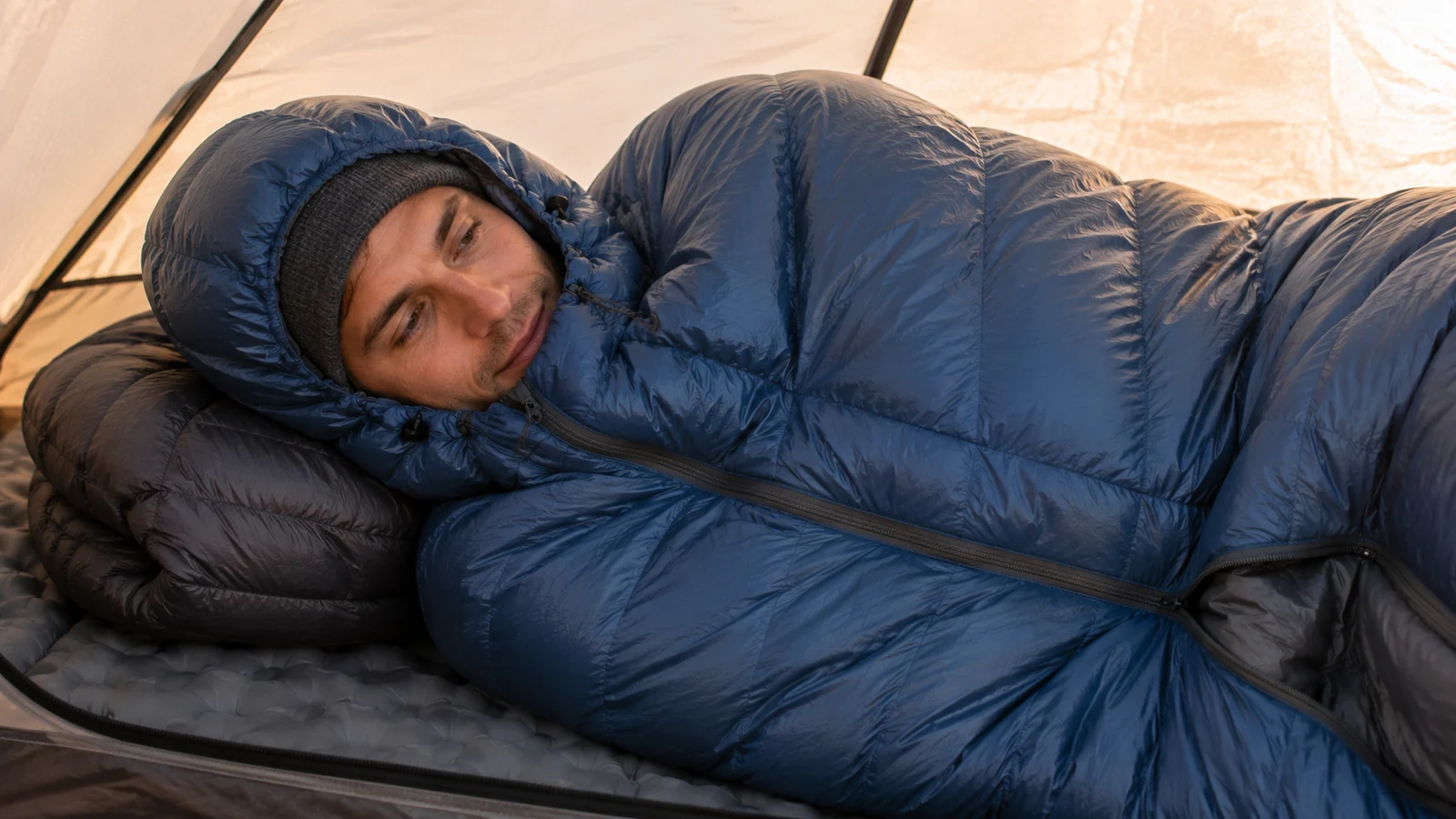
Narrow mummy bags like the Hummingbird UL 20 are excellent for efficiency. They trap heat well, pack small, and make sense for hikers who mostly sleep on their back or stay pretty still. But if you bend a knee, sleep on your side, or hate a tight footbox, a roomier bag may help you sleep warmer simply because you can relax.
That is why bags like the NEMO Riff 30 and Feathered Friends Swift UL 20 stand out. They give you more elbow and knee space without jumping all the way to bulky car-camping dimensions. That extra room can be the difference between a gear spreadsheet win and an actual good night of sleep.
Look closely at the hood, draft collar, zipper layout, and footbox too. Those details matter more than people admit. A great draft collar can protect warmth better than chasing a tiny weight difference between two bags in the same class.
If you are torn between two bags, choose the one that matches how you sleep, not the one that wins by 2 ounces.
How your pad, shelter, and clothing change real-world warmth
A sleeping bag never works alone. Your pad, shelter, site choice, and sleep clothes all change the result.
Start with the pad. Down under your body gets compressed, so the pad does most of the insulation work from below. That means a 20F bag on a warm pad can feel excellent, while the same bag on a low-R summer pad can feel disappointing fast.
Picture Lena in the Wind River Range. She blamed her 20F bag after one miserable 31F night, but the real problem was a minimal summer pad. On her next trip, she kept the same bag, switched to a warmer pad, and slept through nearly the same temperatures without drama. The outcome changed because the full system changed.
Shelter and clothing matter too. A calm campsite behind trees feels different from an exposed ridge. Dry base layers and a hooded puffy can extend a bag’s useful range. Wet socks, poor food intake, and a drafty shelter can crush it.
This is the part most “best of” roundups skip, but it is the reason some people love a bag that others return. Match your sleeping bag to the rest of your sleep system, not to the label alone.
Before you hit checkout, make sure the bag you choose matches the pad and shelter you actually use most often.
FAQ
How light should an ultralight sleeping bag be?
For warm-weather backpacking, around 1 to 1.5 pounds is a reasonable ultralight target. For a real three-season bag around 20F, staying under about 2 pounds is still very strong.
What is the best 20 degree ultralight sleeping bag?
The Feathered Friends Hummingbird UL 20 is the best pick if you want the lightest premium 20F mummy bag. The Western Mountaineering UltraLite is the better pick if you want a slightly roomier, time-tested all-rounder.
Why do ISO comfort and lower-limit ratings matter?
They show how a bag is likely to perform for different sleepers. Comfort is usually the safer number for cold sleepers, while lower limit is often more realistic for warm sleepers who push gear harder.
Which is better for ultralight backpacking: sleeping bag or quilt?
A quilt is usually lighter and more flexible in warm weather. A sleeping bag is usually easier to use in cold, wind, and shoulder-season conditions, which is why many hikers still prefer a true bag.
When should you choose a synthetic bag instead of down?
Choose synthetic if you regularly camp in very wet climates, expect lots of condensation, or want lower cost over maximum packability. Down still wins for the best warmth-to-weight and packed size in most ultralight setups.
Choose the Bag That Matches How You Sleep
The best ultralight sleeping bags 2026 are not just the lightest ones. They are the bags that give you enough warmth, enough room, and enough margin for the trips you actually take. For most backpackers, that means starting with a true 20F model like the Feathered Friends Hummingbird UL 20 or Western Mountaineering UltraLite, then moving lighter only if your weather, sleep style, and experience support it.
If you mostly hike in mild summer conditions, a lighter 30F option like the Sea to Summit Spark 30 or REI Co-op Magma 30 can make real sense. If you toss and turn, a side-sleeper-friendly shape like the NEMO Riff may improve your nights more than any spec upgrade. And if you are an experienced ounce-counter, the Tanager proves just how far modern ultralight design can go.
Pick the bag that matches your coldest realistic trip, your sleeping style, and the pad under you. Make that choice once, make it well, and your pack and your sleep will both feel better for miles.
Next Steps
- Read Sleeping Bag Temperature Ratings Explained before you trust any number on a tag.
- Check Quilt vs Sleeping Bag if you are still deciding between the two shapes.
- Review Down vs Synthetic Insulation for wet-climate fill choices.
Sources
- REI — How to Choose a Backpacking Sleeping Bag — comfort vs limit ratings and fit
- ISO 23537-1 — Sleeping Bags: Thermal and Dimensional Requirements — the test behind published ratings
- Therm-a-Rest — What R-Value Means — why the pad decides how warm a bag feels
- National Park Service — Hypothermia Safety — the safety margin behind a warmer bag
Einen Kommentar hinterlassen