Part 33 of the HikeLab Ultimate Ultralight Guide Series.
Have you ever finished a backpacking trip with sore knees, tight hips, and hands swollen from trying to stay balanced on every descent? That is usually the moment hikers start taking trekking poles for backpacking seriously. They are not just for older hikers, mountain racers, or people crossing rivers in dramatic YouTube thumbnails. They are one of the simplest tools you can add to your kit if you want better stability, less leg fatigue, and more control when the trail gets rough.
This guide starts from a simple truth: backpacking feels harder when your balance, posture, and downhill control break down. The good news is that the right trekking poles for backpacking can fix a lot of that. In the next few minutes, you will learn how to choose pole material, shaft style, grip type, and fit, plus when poles help most, when they are overkill, and how to use them well enough to justify carrying them.
Key Takeaways
- Trekking poles for backpacking reduce strain on descents, improve balance on uneven ground, and help many hikers hike longer with less fatigue.
- The best backpacking poles are the ones that match your terrain, shelter setup, pack weight, and hand comfort, not the lightest model on a product page.
- Adjustable trekking poles are the most versatile choice for most backpackers because they handle climbs, descents, sidehills, and trekking-pole shelters.
- Good technique matters almost as much as the poles themselves, so fit, strap use, and pole length deserve as much attention as materials.
Why Trekking Poles for Backpacking Matter on Real Trips
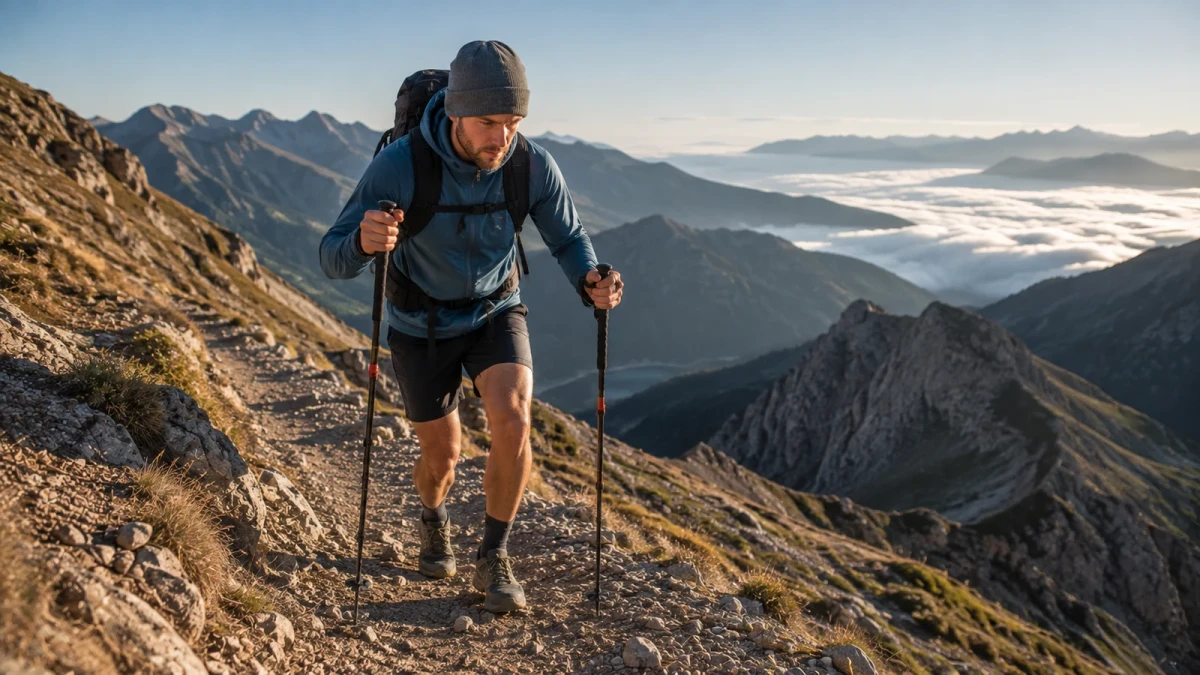
The best case for trekking poles for backpacking is not theoretical. It shows up late in the day, after hours of climbing, descending, and stepping across roots with a loaded pack. When your legs get sloppy, poles give you two extra points of contact and help you keep moving with better control.
That matters most on descents. Downhill hiking puts repeated stress on knees and quads, especially when you are tired or carrying food and water for several days. Backpacking poles let you share some of that load with your upper body, which can make steep trails feel less punishing.
They also help on sketchy terrain. Loose gravel, mud, creek crossings, snow patches, talus, and wet logs all punish bad balance. A pole plant can stop a small wobble from becoming a full fall.
Nina, a weekend backpacker from Oregon, learned this on a rainy section of the Timberline Trail. She skipped poles because she wanted a cleaner setup and thought they would feel annoying. After sliding twice on muddy traverses and arriving at camp with aching knees, she borrowed a spare pair the next morning and finished the loop feeling steadier and faster on every descent.
That does not mean everyone needs poles on every trip. If you are walking smooth trail with a light pack and no major climbs, you may carry them more than you use them. Still, on most uneven routes, trekking poles for backpacking earn their place quickly.
If you are debating whether to try them, start with the trip profile. The rougher, steeper, longer, or more technical the route, the easier it is to justify trekking poles for backpacking.
How to Choose Trekking Poles for Backpacking Without Regret
The fastest way to waste money is to buy poles by weight alone. The smartest way is to match the pole to how you actually hike. That means thinking about terrain, shelter system, hand comfort, packed size, and whether you want one pole or two.
Most backpackers do best with two poles. A pair gives you better rhythm, better balance, and more support on steep descents. One pole can still help, especially for lighter loads or simple trails, but two is usually the better backpacking setup.
Start with shaft material. Aluminum trekking poles are a little heavier, but they are usually tougher and less likely to fail suddenly. Carbon fiber trekking poles save weight and reduce vibration, but they can crack hard if they take the wrong hit against rock.
Then consider adjustability. Fixed-length poles are simple and light, but adjustable trekking poles are more practical for most people. You can shorten them for climbs, lengthen them for descents, and fine-tune them for shelter pitching.
Grip shape matters more than many buyers expect. Cork grips often feel better over long days because they mold slightly to your hand and manage sweat well. Foam grips are comfortable and light, while rubber grips can feel slick or hot in warm weather.
Straps matter too. If the strap digs, twists, or rubs, you will hate using the pole even if every other feature looks perfect. Good trekking poles for backpacking should feel easy to hold for hours, not just light in a spec chart.
Before you buy, make a short checklist with your typical terrain, average pack weight, and whether you use a trekking-pole tent. That one-minute filter will save you from buying the wrong style.
Trekking Poles for Backpacking: Fixed or Adjustable?
For most hikers, adjustable wins. That is especially true if you want trekking poles for backpacking that work across different seasons, trails, and shelter systems. One pair that handles climbing, descending, and tent setup is usually better than a slightly lighter pair with narrow use.
Adjustable trekking poles come in two main styles: telescoping and folding. Telescoping poles usually offer more length range and can feel sturdier under load. Folding poles pack down smaller, which is useful if you stash them often, but they may offer less flexibility for exact shelter heights.
If you use a trekking-pole shelter, adjustability becomes even more valuable. Many popular shelters from Durston, Gossamer Gear, Six Moon Designs, and others rely on pole height for a stable pitch. If your poles do double duty, your shelter setup should be part of your buying decision from the start.
Jake, a thru-hiker training in Colorado, first bought fixed-length running poles because they felt fast and minimal. Then he switched from a freestanding tent to a trekking-pole shelter and realized his poles could not give him the height range he needed. He sold them, bought adjustable poles, and ended up with a setup that worked better for both trail use and camp.
Fixed poles still have a place. They are light, simple, and popular with some fastpackers and trail runners. But for typical backpacking, where terrain and use cases change, trekking poles for backpacking should usually be adjustable.
For a quick overview of backpacking gear tradeoffs, REI’s guide to ultralight backpacking basics is still useful, especially if you are trying to balance weight against durability and comfort.
Best Features to Prioritize in Trekking Poles for Backpacking
Not every feature deserves equal attention. Some improve trail performance right away. Others mostly look good in marketing copy.
The first feature to prioritize is reliable locking. If the pole slips under load, nothing else matters. Flick locks are easy to adjust with gloves and are widely trusted, while twist locks can work well but tend to divide users more.
The second is comfortable grips with enough extension below the main handle. Grip extensions help on steep sidehills or quick terrain changes because you can choke down without stopping to adjust length. That small detail makes trekking poles for backpacking feel far more usable in rolling terrain.
The third is realistic durability. Ultralight trekking poles sound great until one bad plant against a rock leaves you limping with half a pole. If you backpack on rocky trails, carry a heavier load, or rely on your poles for shelter support, it is usually smarter to accept a few extra ounces for a tougher design.
The fourth is basket flexibility. Small baskets work well for most dirt trails and keep swing weight down. Larger baskets help in snow, sand, and softer ground where narrow tips punch through too easily.
The fifth is packed size. This matters if you fly to trailheads, stash poles on scrambling sections, or want them out of the way when not in use. Folding models do well here, but some compact telescoping backpacking poles also travel well.
If you want a product design benchmark, Black Diamond’s trekking poles overview and LEKI’s pole fit guide both explain how grip, straps, and pole length affect performance. Those resources are useful because they focus on function instead of just catalog specs.
When you compare models, ignore the tenth feature on the product page and rank only five things: lock security, comfort, durability, adjustability, and shelter compatibility. That is where most buying wins happen.
When Trekking Poles for Backpacking Help Most
Backpackers often ask whether poles are worth carrying on every trip. The honest answer is no. The better question is when they create the biggest payoff.
The first high-value situation is long descents. This is where trekking poles for backpacking often feel almost magical because they help manage impact and rhythm. If your knees usually complain after downhill miles, that is a strong sign poles may help.
The second is unstable footing. River crossings, slick roots, snow patches, talus, and muddy traverses all reward extra balance. A simple pole plant can turn uncertainty into a confident step.
The third is carrying a bigger load. Early-season gear, shoulder-season insulation, bear canisters, camera gear, or extra food for long stretches all increase the value of backpacking poles. More pack weight usually means more benefit from support and balance.
The fourth is using a trekking-pole shelter. In that case, trekking poles for backpacking are doing double duty, which improves their weight value. One piece of gear helps both movement and camp.
The fifth is managing fatigue late in the day. Many hikers do fine without poles for the first six miles and then make worse foot placements as they tire. That is exactly when poles help most.
Sara, a teacher from North Carolina, noticed this on a three-day loop in the Smokies. She barely touched her poles on smoother morning trail, then relied on them heavily during a wet, rooty descent to camp. Without them, she said she would have slowed way down just to stay upright.
For public-land safety basics, the National Park Service’s Ten Essentials is still worth reviewing. Poles are helpful, but they are not a substitute for route planning, layers, navigation, and hydration.
Common Mistakes That Make Backpacking Poles Feel Useless
Many hikers try poles once, hate them, and give up for reasons that have nothing to do with the concept itself. Usually the problem is poor fit or poor technique, not the idea of trekking poles for backpacking.
The first mistake is setting them too high all day. Overlong poles force awkward shoulder position and clumsy plants. A good starting point is elbows near 90 degrees on flat ground, then shorter for climbs and longer for descents.
The second mistake is using the straps wrong. Your hand should come up through the bottom of the strap, then rest down onto it. That setup transfers some load to the strap and reduces grip fatigue.
The third mistake is planting both poles too far in front of your body. That kills rhythm and can make poles feel like extra work. On normal trail, they should support your stride, not interrupt it.
The fourth mistake is buying a light pair that does not match your use. A delicate carbon model may feel amazing on a smooth trail and terrible when you depend on it under a loaded pack. Good trekking poles for backpacking should fit your actual conditions, not your fantasy kit.
The fifth mistake is never folding or stashing them when they are not needed. There are times when hands-on scrambling, easy flat trail, or dense brush make poles less useful. Smart use includes knowing when to put them away.
If you use backpacking poles with a shelter, another mistake is forgetting to check lock tension before pitching. A slipping pole can turn a solid shelter pitch into a sagging mess in wind or rain.
How to Fit and Use Trekking Poles for Backpacking Better
Fit starts with length, but good use goes beyond length. The goal is smooth support, not constant poking and dragging.
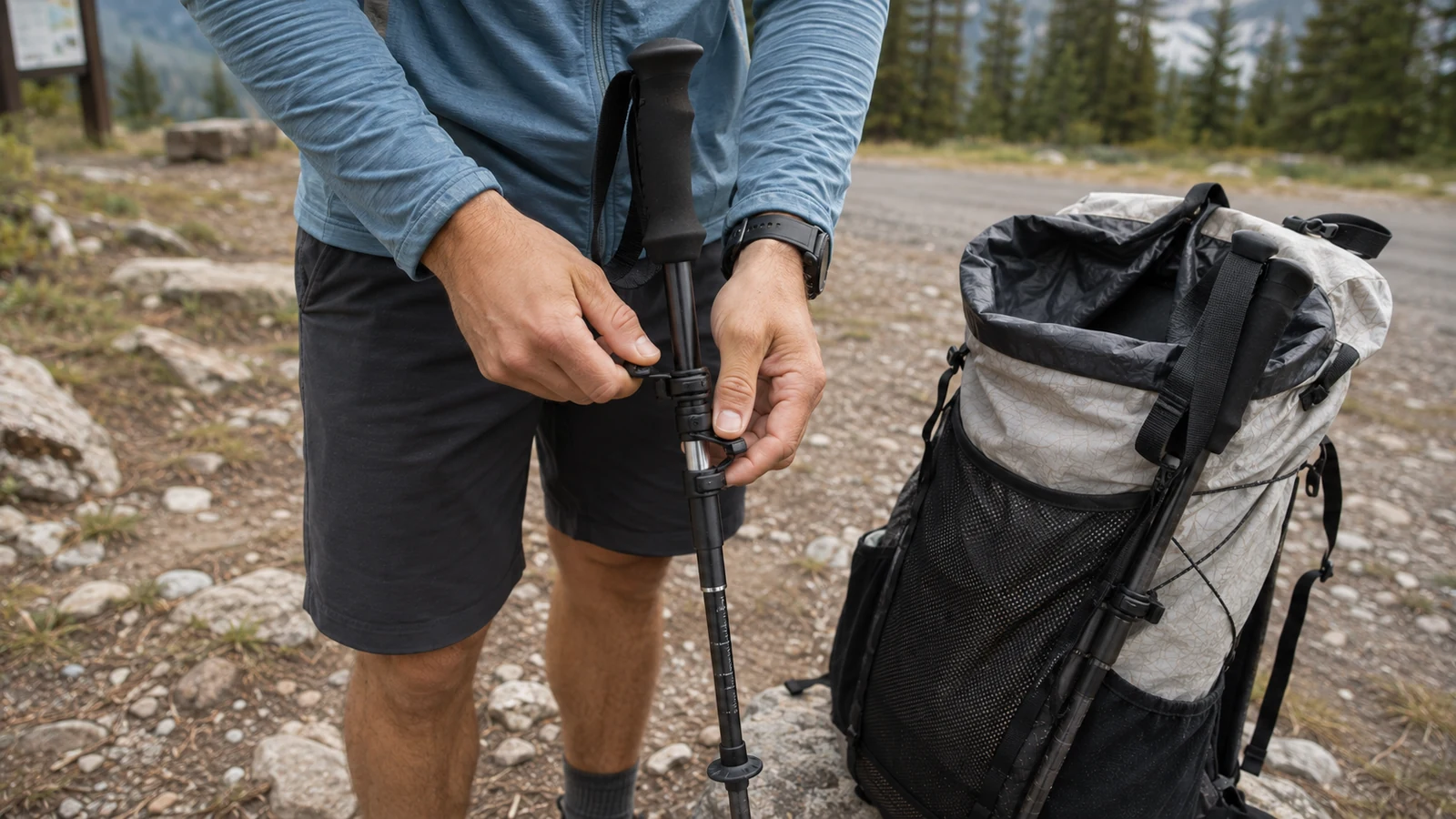
On flat terrain, set your poles so your forearms stay roughly level when the tips touch the ground near your feet. Shorten them a bit for steep climbs so you are not lifting your shoulders on every plant. Lengthen them for descents so you can brace sooner and stand more upright.
Use the straps correctly and keep your grip relaxed. You should not be squeezing the handles like tools in a workshop. Let the strap carry some pressure and let your hands stay loose.
Match pole use to terrain. On mellow trail, light alternating plants usually work best. On stream crossings or sketchy moves, plant both poles first, test stability, and then step.
This is also where trekking poles for backpacking intersect with pacing. If your stride is short and rushed, poles can feel chaotic. If your rhythm is calm, poles start to feel almost automatic.
Leave No Trace still applies here. Avoid stabbing fragile vegetation, widening trails, or punching unnecessary holes into soft ground near camp. The Seven Principles overview is a solid refresher if you want your movement habits to be lighter as well as your gear.
If you are new to poles, use them on two or three local hikes before judging them. Most hikers need a little time before trekking poles for backpacking feel natural.
FAQ
How do I choose trekking poles for backpacking?
Choose trekking poles for backpacking based on your terrain, pack weight, shelter setup, and hand comfort. Most backpackers will be happiest with adjustable poles, secure flick locks, comfortable grips, and a balance between low weight and real durability.
What are the best materials for backpacking poles?
Aluminum is usually the safer choice if durability matters most, while carbon fiber trekking poles make sense if you want lower weight and understand the tradeoff in impact resistance. For many hikers, the best material depends on how rough the terrain is and how heavily they lean on the poles.
Why do trekking poles help on descents?
They help because they improve balance and let you shift some impact away from your legs during repeated downhill steps. That can reduce fatigue, smooth your rhythm, and make steep terrain feel more controlled.
Which trekking poles are better for a trekking-pole tent?
Adjustable trekking poles are usually better because they let you dial in the shelter height the manufacturer recommends. Telescoping poles often give the most flexibility, though some folding models also work if their adjustment range matches your shelter.
When should I leave backpacking poles at home?
You can leave them at home on smoother, shorter trips where the trail is stable, your pack is light, and you know you will rarely use them. Even then, many hikers still bring them for knee relief, stream crossings, or shelter support.
Next Steps
- Compare options in The Ultimate Base Weight Guide to see how poles affect total carry weight.
- Read Trail Runners vs Hiking Boots for the complete footwear picture.
- Check Trekking Pole Tents to see how poles double as shelter structure.
Sources
- Backpacking Light — Trekking Pole Reviews — pole testing and comparison data
- OutdoorGearLab — Trekking Pole Reviews — carbon vs aluminum analysis
- NOLS — Pole Technique — proper trekking pole use in the backcountry
- Gossamer Gear — Pole Anatomy Guide — pole construction and selection
Leave a Comment