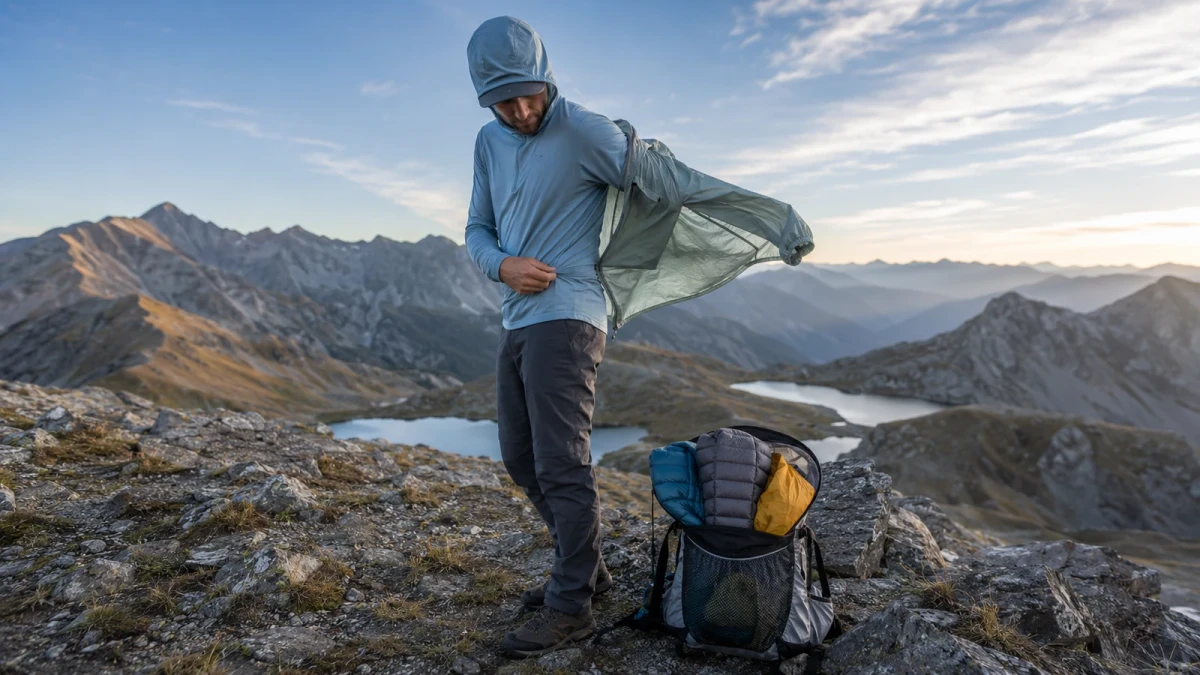
Part 28 of the HikeLab Ultimate Ultralight Guide Series.
If you want to hike lighter without being cold, wet, or miserable, the answer is not packing more clothes. It is packing fewer pieces that each do more. An ultralight clothing system is a small, intentional set of layers that lets you handle movement, rest breaks, wind, rain, sun, and sleep without carrying redundant weight.
That means choosing clothing by function, not by outfit. You need a next-to-skin layer that manages sweat, an active insulation or wind layer for cool movement, a true insulation layer for stops and camp, and weather protection when conditions turn. Most backpackers carry too many “just in case” pieces, especially extra shirts, heavy midlayers, and backup pants. A smart layering system cuts that clutter while improving comfort.
This guide breaks down how to build an ultralight clothing system that works in the real world, including what each layer should do, where the tradeoffs are, and what mistakes waste pack weight fast.
Key Takeaways
- Ultralight clothing works best as a system, not a pile of individual garments.
- The goal is versatility per ounce, not owning the lightest possible item in every category.
- For most 3-season backpacking, one worn set plus a small camp/sleep backup is enough.
- Wind layers are often more useful than heavier fleece for active hiking.
- Your puffy is for low-output time, not usually for hiking uphill.
- Rain gear should be chosen for expected weather, not fantasy-level worst cases.
- Redundant clothing is one of the easiest places to cut pack weight without much risk.
- The right system depends on climate, pace, elevation, and how cold you personally run.
What an Ultralight Clothing System Actually Means
An ultralight clothing system is not “bring less and suffer.” It means each piece has a job, and pieces work together across a range of conditions.
Instead of packing separate clothes for: - hiking when warm - hiking when cool - hiking in wind - camp - sleeping - emergencies
You combine a few layers so the same items cover multiple situations.
A good system should let you: - dump heat while climbing - avoid getting chilled on breaks - stay functional in wind and light precipitation - stay warm enough in camp - protect yourself while sleeping if temperatures drop
That is the core principle: broad coverage with minimal redundancy.
The Core Layers
Most ultralight backpackers can think in five clothing categories.
1. Base Layer
Your base layer sits against the skin and manages moisture. For hiking, this is usually a synthetic or merino shirt.
What it should do: - move sweat reasonably well - dry fast enough for your climate - feel comfortable when damp - work across multiple days
Common choices: - Synthetic: dries faster, cheaper, usually smells worse - Merino: better odor control, often more fragile, slower to dry - Merino blend: often the best compromise
For many hikers, the “base layer” during the day is just a lightweight sun hoodie or hiking shirt. You do not necessarily need a separate dedicated base layer top unless you want one for sleep.
2. Active Layer
This is the layer you add while still moving in cool, breezy, or variable weather. It is one of the most misunderstood parts of layering.
Good options: - lightweight fleece - alpha-style insulation pieces - wind shirt - sometimes just your rain shell in short bursts
A lot of backpackers discover that a light wind shirt does more work than expected. It adds meaningful warmth over a base layer, cuts convective heat loss, and weighs very little. In many shoulder-season conditions, a sun hoodie plus wind shirt is enough while moving.
3. Static Insulation
This is your warmth layer for breaks, camp, and cold mornings before you start moving. Usually this means a puffy jacket.
Options: - Down puffy: best warmth-to-weight, compresses well, weaker in persistent wet conditions - Synthetic puffy: heavier for same warmth, handles moisture better, dries faster
This is not the same as your active layer. If you hike hard, you will usually overheat fast in a puffy.
4. Weather Shell
Your shell protects you from wind, rain, and sometimes cold. In an ultralight setup, this is typically: - a wind shirt - a rain jacket - sometimes rain pants or a rain skirt, depending on conditions
Do not confuse “water-resistant” with “rain protection.” A wind shirt is not a rain jacket. It is a highly useful piece, but it has limits.
5. Legwear and Accessories
Lower-body clothing is often where people overpack.
Typical ultralight leg system: - hiking shorts or pants - optional light thermal bottoms for sleep/camp - optional rain pants/skirt depending on forecast and exposure
Accessories matter more than many hikers expect: - warm hat - sun hat - light gloves - spare socks - buff or neck gaiter
A light pair of gloves and a hat can add more usable warmth per ounce than another torso layer.
A Simple 3-Season Ultralight Clothing System
Here is a practical starting point for many backpackers in 3-season conditions.
| Category | Typical Choice | Main Job | Common Mistake |
|---|---|---|---|
| Hiking top | Sun hoodie or light shirt | Sun, bug, and sweat management | Bringing multiple hiking shirts |
| Hiking bottoms | Shorts or light pants | Mobility and basic protection | Packing extra town-style pants |
| Active warmth | Wind shirt or light fleece | Warmth while moving | Using a puffy for uphill hiking |
| Static warmth | Lightweight puffy | Warmth in camp and on breaks | Choosing too little insulation for stops |
| Rain protection | Rain jacket | Rain and wind protection | Overbuilding for rare conditions |
| Sleep layer | Lightweight top/bottom if needed | Dry backup and added sleep warmth | Carrying a full spare outfit |
| Accessories | Hat, gloves, extra socks | Fine-tune warmth and comfort | Ignoring small items that matter |
For many trips, that is enough.
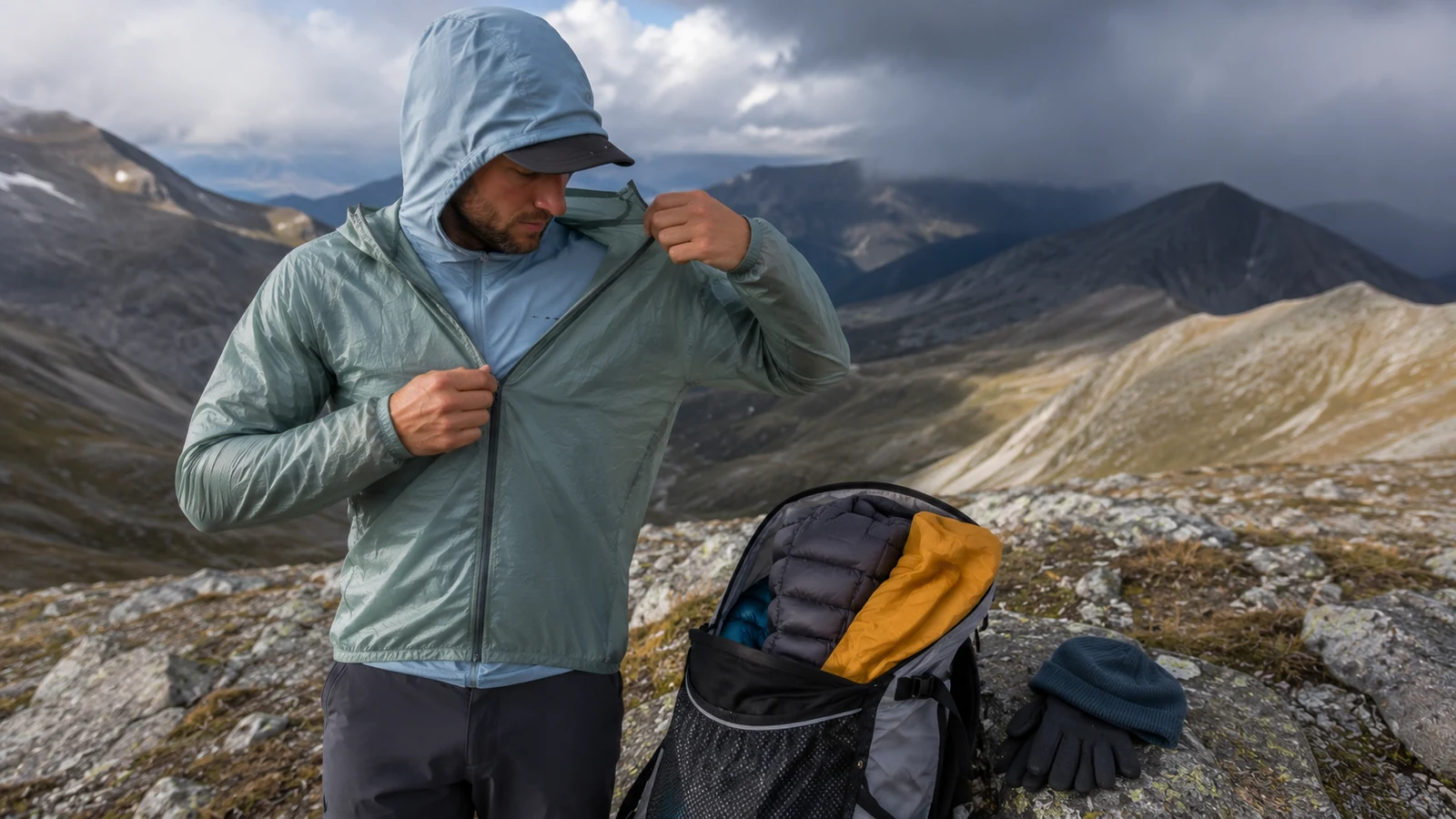
How to Choose Layers by Conditions
The right clothing system depends less on brand names and more on likely conditions.
Warm and Dry Conditions
Priority: - sun protection - ventilation - minimal carried insulation
Typical setup: - sun hoodie or light shirt - shorts - wind shirt - light puffy for evenings - rain shell only if storms are plausible
Tradeoff: You can go very light here, but desert or alpine nights can still be cold. Do not let hot daytime temperatures trick you into underpacking insulation.
Cool and Variable 3-Season Conditions
Priority: - flexible active layering - fast drying - reliable rain protection
Typical setup: - base hiking layer - wind shirt or breathable fleece - puffy - rain jacket - optional sleep layers - hat and gloves
This is where a real layering system pays off. You will likely use every piece.
Cold Shoulder Season Conditions
Priority: - stronger insulation - hands and head protection - margin for long stops and slower movement
Typical setup: - hiking base - active insulation layer - warmer puffy - reliable shell - thermal sleep layers - gloves, warm hat, dry socks
Tradeoff: Ultralight still works, but the margin for error shrinks. This is not the place to copy a summer gear list and hope.
Smart Decision Criteria
When evaluating clothing, ask these questions.
1. Can this item cover more than one role?
A sun hoodie can handle sun, bugs, and base-layer duty. A wind shirt can add warmth, block wind, and reduce the need for a heavier fleece. Multi-use pieces are the backbone of ultralight systems.
2. Will I actually wear this while moving?
If not, it is probably static insulation. That matters because many hikers buy layers that are too warm for movement and too light for camp, which means the piece does neither job well.
3. How does it handle moisture?
This is one of the biggest decision points.
If you expect: - dry cold: down becomes more attractive - humid cold: synthetics and active layers become more attractive - frequent rain: fast-drying systems matter more than absolute warmth-to-weight
4. What happens if this gets wet?
Be honest. A layer that is amazing in theory but fails once soaked may not fit your environment.
5. Am I packing for expected conditions or anxiety?
There is a difference between prudent margin and dead weight. If you regularly carry extra shirts, duplicate insulation, and camp-only clothing “just in case,” you are probably packing fear, not function.
The Biggest Tradeoffs
Ultralight clothing is about managing tradeoffs, not pretending they do not exist.
Weight vs Durability
Lighter fabrics can wear faster, especially under pack straps, brush, and repeated washing. If you hike a lot off-trail or in abrasive terrain, slightly heavier may be smarter.
Breathability vs Weather Resistance
Highly breathable layers are great while moving but often weaker in wind or rain. More protective shells can trap sweat. There is no perfect piece. Choose based on your expected effort level and climate.
Down vs Synthetic
Down wins on: - weight - compressibility - warmth for the ounce
Synthetic wins on: - wet tolerance - easier care - often lower cost at entry level
If most of your trips are cool and dry, down makes sense. If you spend a lot of time in damp climates, synthetic becomes more compelling.
Comfort vs Minimalism
Some hikers sleep better with dedicated sleep clothes. Others are fine sleeping in their hiking base layer. Carrying a dry sleep layer can be worth it if it improves recovery or safety. Ultralight does not mean cutting every comfort item. It means making that choice consciously.
Common Clothing Mistakes to Avoid
Packing Too Many Changes of Clothes
This is the classic beginner move. Backpacking is not travel with scenic walking. You do not need a clean outfit every day.
For many trips: - 1 hiking shirt - 1 hiking bottom - 1 insulation jacket - 1 shell - 1 sleep backup if needed is enough.
Bringing the Wrong Midlayer
Heavy fleece used to be the default answer. It still works, but many hikers carry a fleece that is too warm, too bulky, or too redundant once they also have a puffy and rain shell. Sometimes the better answer is a lighter fleece or a wind shirt.
Using the Puffy as an Active Layer
You climb in it, sweat into it, stop, and then feel colder later. Puffy insulation works best when you preserve its loft for static warmth.
Overpacking Leg Layers
Many hikers are surprisingly comfortable with fewer lower-body layers than upper-body layers. If your torso is dialed, you may not need extra hiking pants, camp pants, and thermal bottoms on the same trip.
Ignoring Small Accessories
Cold hands can ruin a morning. So can wet socks or an exposed head in wind. Tiny pieces often solve comfort problems better than adding a whole extra jacket.
Buying by Spec Sheet Alone
The lightest piece is not automatically the best piece. Fit, hood design, zipper length, cuff design, and real-world breathability all matter. A slightly heavier layer you actually use is better than a lighter one that always stays in the pack.
Example Systems for Different Backpackers
Minimal 3-Season Fastpacker
- Sun hoodie
- Running shorts
- Wind shirt
- Light puffy
- Rain jacket
- Spare socks
- Light gloves
- Warm beanie
Best for: - high movement - shorter stops - mild to moderate 3-season conditions
Risk: Limited margin if weather deteriorates or pace drops.
Balanced Weekend Backpacker
- Sun hoodie or lightweight tee
- Shorts or hiking pants
- Wind shirt or light fleece
- Midweight puffy
- Rain jacket
- Sleep base layer
- Warm hat
- Gloves
- Extra socks
Best for: - varied conditions - mixed effort levels - most spring through fall trips
This is the sweet spot for a lot of hikers.
Damp-Climate Hiker
- Synthetic or blend hiking top
- Light pants
- Breathable active layer
- Synthetic puffy
- Reliable rain shell
- Sleep layers stored dry
- Waterproof mitt solution if cold
Best for: - maritime climates - long wet stretches - places where “it will dry tomorrow” is not a valid plan
How to Actually Pack and Use the System
The clothing system is not just what you bring. It is how you manage it.
Practical rules: - Start slightly cool. If you leave camp warm, you are probably overdressed. - Vent early. Open zippers, push sleeves, remove hats before sweat builds. - Add insulation the moment you stop, not after you get cold. - Protect sleep layers and puffy from moisture. - Treat socks as a foot-management system, not just clothing.
A strong clothing system depends on timing. The same layers feel great or terrible depending on when you put them on.
When It Makes Sense to Carry a Little More
There are times when shaving every ounce is not the smart move.
Carry more clothing margin when: - forecast uncertainty is high - you are leading less experienced hikers - mileage is low and camp time is long - the route has major exposure - you know you get cold easily - consequences of being underdressed are serious
That is still compatible with ultralight thinking. The point is to carry justified weight, not automatic weight.
FAQ
What is the best base layer for ultralight backpacking?
For most hikers, a lightweight synthetic or merino-blend top is the best balance. Synthetic dries faster and costs less. Merino controls odor better. A sun hoodie is often the most versatile option because it covers sun protection and hiking-layer duty at the same time.
Do I need both a fleece and a puffy?
Not always. Many hikers can get by with a wind shirt plus puffy, or a fleece plus rain shell plus puffy depending on climate. If you are carrying both, make sure they serve different jobs: fleece for active use, puffy for static warmth.
Are rain pants worth it in an ultralight setup?
Sometimes. They are more useful in cold rain, strong wind, shoulder-season conditions, and high-exposure terrain. In warm conditions, many hikers skip them or use a rain skirt. The choice depends on temperature more than rain alone.
How many spare clothes should I bring backpacking?
Usually fewer than you think. For many 2-5 day trips, one worn hiking set, one insulation layer, one rain layer, one extra pair of socks, and optional sleep clothes are enough. Extra shirts and redundant camp outfits are common dead weight.
Is ultralight clothing just for experienced hikers?
No, but it does require better judgment. A lighter system works well when you understand your weather, effort level, and personal cold tolerance. Beginners can absolutely use ultralight clothing principles, but they should be conservative about insulation and rain protection until they know their limits.
Final Thoughts
The best ultralight clothing system is not the one with the fewest ounces on paper. It is the one that keeps you moving comfortably, lets you stop without getting chilled, and avoids carrying redundant junk you never use.
For most backpackers, that means fewer total garments, better separation between active and static insulation, and more respect for wind, moisture, and timing. Cut duplicate clothing first. Keep the layers that solve real problems. If every piece in your pack has a clear job and earns its spot across multiple conditions, you are doing it right.
Next Steps in the HikeLab Series
Sources
- REI Co-op
- OutdoorGearLab
- HikeLab Editors
Leave a Comment