Part 37 of the HikeLab Ultimate Ultralight Guide Series.
What breaks most thru-hikes first: weak gear, bad weather, or a body that was never ready for day 11? For a lot of hikers, the answer is fitness. They start excited, push hard for a week, then run into sore knees, blown feet, tight hips, and the kind of fatigue that turns a dream trail into a survival grind. That is why thru-hike training and fitness matters so much before your first long trail, whether you are eyeing the Appalachian Trail, Pacific Crest Trail, Camino, or a shorter regional route.
If you are worried you are not fit enough, you are not alone. The good news is you do not need to train like an elite runner or live in the gym. You need a plan that matches hiking reality: long days, steady climbing, loaded walking, recovery, and consistency. This guide will show you what to train, how to build trail-ready endurance, where most hikers make mistakes, and how to arrive at the trailhead feeling capable instead of nervous.
Key Takeaways
- Thru-hike training and fitness works best when you build endurance, leg strength, pack tolerance, and recovery at the same time.
- The strongest training plans look boring on paper: lots of walking, gradual pack progression, and simple strength work done consistently.
- Injury prevention matters as much as cardio because hips, feet, knees, and calves usually fail before motivation does.
- You do not need a perfect body to thru-hike, but you do need enough trail conditioning to handle repeated days without digging a deep fatigue hole.
Why Thru-Hike Training and Fitness Matters More Than Motivation
Motivation gets you to the trailhead. Fitness helps you stay there when the miles stop feeling romantic. A thru-hike asks your body to repeat the same movement pattern for weeks or months, often while climbing, descending, and carrying food, water, and shelter.
That repetitive load is what surprises people. A single strong weekend hike does not automatically translate to back-to-back 15-mile days with a pack. Long-distance hiking fitness is less about one heroic effort and more about how well you recover and do it again tomorrow.
Sara learned that on her first attempt at the Colorado Trail. She was active, ran 5Ks, and assumed general fitness would carry her. By day six, her shoulders were raw, her calves were locking up on descents, and she had to take an unplanned zero that cost her confidence as much as time.
Three months later, she tried again with a better system. She walked four days a week, added step-ups and split squats, and trained with a pack that gradually increased from 10 to 24 pounds. On her next section, she still felt the climbs, but she stopped spiraling every evening and finished the segment strong.
That is the point of thru-hike training and fitness. You are not trying to eliminate discomfort. You are trying to raise your capacity so normal trail stress feels manageable instead of overwhelming.
If you are still early in the planning stage, pair this article with a gear shakedown so your body is not compensating for avoidable pack weight. REI’s ultralight backpacking basics is a useful starting point if you want to reduce load before you increase training volume.
Thru-Hike Training and Fitness Starts With an Honest Baseline
Most hikers either underestimate the challenge or overcomplicate the fix. The smarter move is to start with a simple baseline. Ask yourself how many days per week you currently walk, how often you climb stairs or hills, whether you can carry a loaded pack for two hours, and how your feet and joints feel the next day.
You do not need lab testing. You need honest signals from your current life. If a five-mile walk leaves you wrecked, your first goal is not speed. It is building repeatable aerobic capacity and tissue tolerance.
A good baseline week includes three checks:
- One brisk walk or easy hike of 60 to 90 minutes
- One loaded walk with a light pack
- One simple strength session focused on legs and core
From there, track only a few numbers. Note total walking time, pack weight, weekly elevation if available, and recovery quality the next morning. That is enough to spot whether your training plan is building you up or grinding you down.
This is also where people need to drop ego. You do not win anything by training too hard in week one. The best thru-hike training plan is the one you can actually sustain for 8 to 12 weeks without getting hurt.
Before you buy another supplement or gadget, spend one week logging your normal movement, daily step count, and one loaded walk. That record will tell you what kind of training gap you really need to close.
Build the Engine: Endurance for Long-Distance Hiking Fitness
The base of thru-hike training and fitness is aerobic endurance. In plain English, that means teaching your body to keep moving at an easy to moderate effort for a long time without redlining. Most trail days are won with patience, not speed.
The easiest way to build that engine is walking. Not glamorous walking. Just consistent walking on roads, trails, hills, treadmills, stairs, or whatever you can access. If you already hike often, add duration before intensity.
For most beginners, this weekly structure works:
- Two moderate walks of 45 to 75 minutes
- One longer walk or hike of 90 minutes to 4 hours
- One hill, stair, or incline treadmill session
Keep most of it conversational. If you cannot speak in full sentences, you are probably going too hard for base training. Save the gut-busting efforts for later, and only if your body is handling volume well.
Jason, a teacher from North Carolina, built his Pacific Northwest Trail prep around this exact principle. He stopped chasing random hard workouts and started walking before work, hiking longer on Saturdays, and using a stadium staircase once a week. Over ten weeks, he went from struggling with eight loaded miles to knocking out a 17-mile shakedown and waking up ready for more.
Backpacking endurance improves fast when the work stays specific. Cycling, rowing, and running can help your heart and lungs, but they do not fully prepare your feet, shoulders, and hips for hours under a pack. Hike-specific volume still needs to anchor the program.
If your uphill form falls apart late in a session, film yourself on a climb once a month. Shorter steps, an upright chest, and a pack that rides on your hips instead of your shoulders will show up on video long before you feel them going wrong.
Strength Training for Thru-Hikers: Legs, Core, and Joint Control
A lot of hikers think strength training is optional because hiking itself feels like leg work. That logic falls apart on descents, uneven trail, and day-after-day fatigue. Strength training for hikers is not about bodybuilding. It is about making each step cheaper, steadier, and safer.
You do not need a complicated gym split. Two sessions per week is enough for most people, especially if one focuses on lower-body strength and the other on balance and trunk stability. Keep the exercises simple and progressive.
Strong choices include:
- Step-ups
- Split squats or lunges
- Romanian deadlifts
- Calf raises
- Glute bridges or hip thrusts
- Planks and side planks
- Farmer carries
These moves train the patterns that show up on trail. Step-ups help with climbs. Split squats and deadlifts build control for descents and uneven footing. Calf work and carries matter more than people expect once the terrain gets rough and your pack stops feeling light.
Mina, who trained for the Tour du Mont Blanc after two ankle scares, found that balance drills and single-leg strength changed everything. She still did her long walks, but adding controlled step-downs, calf raises, and single-leg hinges reduced the wobble that used to show up late in the day. She finished her route without the ankle flare-ups that had cut previous trips short.
Aim for clean reps, not exhausted reps. One to three sets of each exercise is plenty when you are also doing a serious amount of walking. The goal is to build support around the joints, not trash your legs so badly that your next hike becomes useless.
If you are also dialing in your load, keep your gear list realistic. The National Park Service’s Ten Essentials is still the right safety floor, even when you are training to move lighter and faster.
Pack Training, Hills, and the Reality of Trail Conditioning
General fitness helps, but trail conditioning gets specific when you add hills and a pack. This is where thru-hike training and fitness starts to feel like actual thru-hike prep instead of generic exercise.
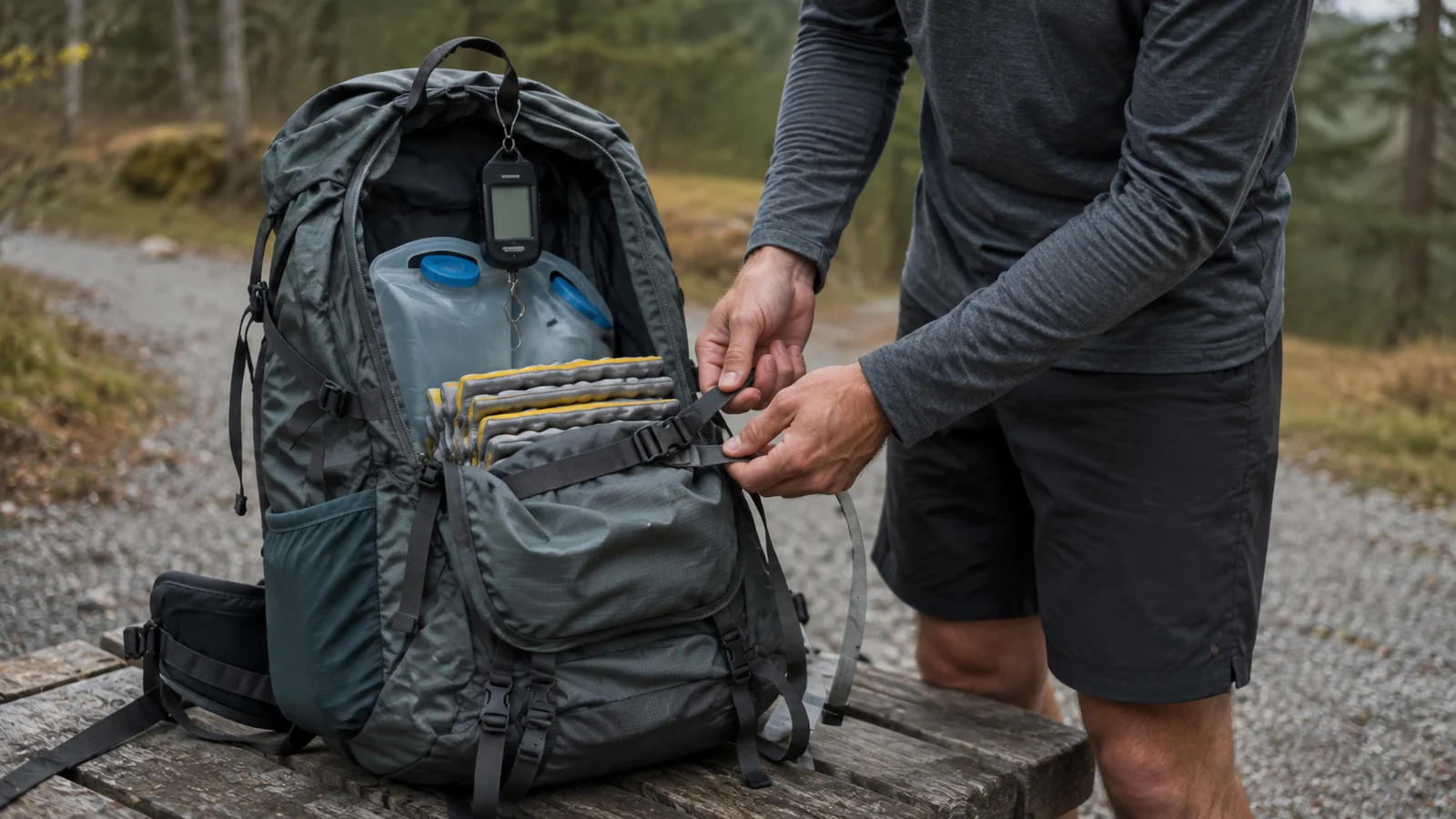
Begin with a lighter pack than you think you need. Starting too heavy often changes your gait, irritates your feet, and teaches sloppy movement. A better progression is to begin around 10 to 15 pounds, then add 2 to 4 pounds every one to two weeks as long as recovery stays solid.
You also need downhill practice. Climbs leave people breathing hard, but descents are what often beat up quads, knees, toes, and hips. If your area has hills, use them. If not, stairs, parking garages, stadium steps, and treadmill incline work can still build useful tolerance.
A practical weekly flow looks like this:
- One long easy hike with a pack
- One shorter hill or stair workout
- One moderate recovery walk on flatter ground
That mix teaches you how to handle time on feet without making every session a sufferfest. It also helps you test shoes, socks, trekking pole use, blister prevention, and fueling in motion. Those details matter because a thru-hike is not just fitness. It is systems management under fatigue.
Do one monthly shakedown day with your real footwear, real pack, and real trail snacks. Treat it like a rehearsal, not a workout. You will learn more from that than from another week of guessing.
Recovery, Mobility, and Injury Prevention Keep You Moving
The best hikers are not always the fittest on paper. Often, they are the ones who recover fast enough to keep stacking days. Recovery is not laziness inside a thru-hike training plan. It is what makes the next session useful.
Sleep is the first lever. If your sleep is poor, your recovery, appetite control, mood, and tissue repair all slide in the wrong direction. Aim for consistent sleep hours before you chase marginal gains elsewhere.
Mobility work should stay targeted. You do not need hour-long stretching routines. Most hikers benefit from 10 to 15 minutes focused on calves, ankles, hips, hamstrings, and thoracic rotation. The goal is not becoming flexible for its own sake. The goal is keeping a functional range of motion while volume rises.
Pay special attention to these warning signs:
- Sharp pain that changes your gait
- Persistent hot spots or blisters in the same location
- Swelling that lasts more than a day
- Sudden drop in energy, appetite, or coordination
Those are not badges of commitment. They are course-correction signals. Backing off for three days is often smarter than forcing another hard session and losing three weeks.
For technique and movement basics, the American Academy of Orthopaedic Surgeons has a clear overview of hiking safety and injury prevention. The Leave No Trace Seven Principles are worth reviewing too, because efficient camps and better route habits reduce both physical stress and sloppy decision-making.
Fuel, Hydration, and Body Weight Without the Drama
Many hikers train hard but ignore the fact that underfueling makes everything feel harder. Good thru-hike training and fitness depends on having enough energy to adapt to the work. If your body never gets enough fuel, your workouts become damage instead of training.
Start by eating enough around your longest sessions. That usually means a meal with carbs and protein after training, plus simple fuel during longer hikes. You do not need a fancy sports nutrition protocol for most prep phases. You need consistency and enough calories to recover.
Hydration matters, but so does context. A cool-weather two-hour walk is different from a hot four-hour climb. Use training to learn how much you actually drink, how much sodium you need in warmer conditions, and which foods your stomach handles well while moving.
This is also where body weight conversations get messy. Some people assume they need to lose weight before they can thru-hike. Sometimes reducing body mass can help. Sometimes the bigger win is improving strength, endurance, and pack weight instead of chasing a number that leaves you underfed and tired.
A better question is this: are you getting more capable each month? If your walking volume, hill tolerance, pack comfort, and recovery are all improving, you are moving in the right direction. Performance trends usually matter more than scale drama.
If you want a simple rule, eat enough to support the work, practice trail snacks before the trip, and treat hydration like a skill instead of an afterthought. That alone can clean up a surprising amount of bad trail experience.
A Simple 8-Week Thru-Hike Training Plan You Can Actually Follow
A good thru-hike training plan should feel sustainable, not heroic. This sample works well for many hikers with a basic fitness level. Adjust volume down if you are starting from lower capacity, and adjust it up carefully if you already hike a lot.
Weeks 1-2: Build consistency
Walk three to four times per week for 30 to 60 minutes. Add one easy strength session and one light pack walk with 10 to 15 pounds. Focus on routine, footwear, and recovery.
Weeks 3-4: Add time on feet
Increase one weekly hike to 90 minutes or more. Add a second strength session and one hill or stair session. Keep the pack light enough that your stride stays natural.
Weeks 5-6: Add specificity
Take one long hike each week with your pack, building toward 2.5 to 4 hours depending on your current level. Add more elevation if possible and raise pack weight gradually. Practice the food, water, and layering choices you expect to use on trail.
Weeks 7-8: Rehearse the real thing
Do one back-to-back weekend with two longer hikes or one overnight shakedown. Keep strength work shorter and focus on showing up fresh enough to move well. By the end of week eight, you should have a realistic picture of your long-distance hiking fitness, not a fantasy version of it.
You can keep this plan simple:
- Two to three easy to moderate walks
- One long hike
- One hill session
- Two short strength sessions
- One full rest day
That is enough for a lot of hikers to make meaningful progress. If you have more time, add volume carefully, not randomly. More is only better when you can recover from it.
FAQ
How do I start thru-hike training and fitness if I am out of shape?
Start with walking, not punishment. Build a routine of three to four walks per week, add one short strength session, and increase time on feet slowly. The first goal is consistency, not intensity.
What is the best workout for thru-hike training?
The best workout is usually a combination of long walks or hikes, hill work, loaded pack walks, and basic lower-body strength training. Thru-hike prep works best when it looks like hiking, not random hard exercise.
Why is pack training important for long-distance hiking fitness?
Pack training prepares your shoulders, hips, feet, and posture for the specific load you will carry on trail. Cardio alone cannot fully train those systems, which is why some fit people still struggle early in a thru-hike.
Which muscles should hikers train the most?
Most hikers should focus on glutes, quads, calves, hamstrings, and core stability. Those areas help with climbing, descending, balance, and keeping good form as fatigue builds.
When should I start training before a thru-hike?
Eight to twelve weeks is a solid runway for many hikers, but more time is better if you are starting from a lower base. If you already know you have weak ankles, knee pain, or low endurance, start earlier and progress more gradually.
Next Steps
- Read Food, Calories & Resupply Strategy for fueling a long trail.
- Check The European Thru-Hiking Gear List for the kit side of a multi-week trip.
- Review Pack Testing & Gear Longevity for gear durability on extended trips.
Sources
- NOLS — Wilderness Medicine and Expedition Preparation — expedition fitness and risk management
- American Academy of Orthopaedic Surgeons — Hiking Safety — overuse injury prevention
- National Park Service — Ten Essentials — safety floor for training hikes and shakedowns
- Leave No Trace — Seven Principles — camp and route habits that lower daily stress
Leave a Comment